

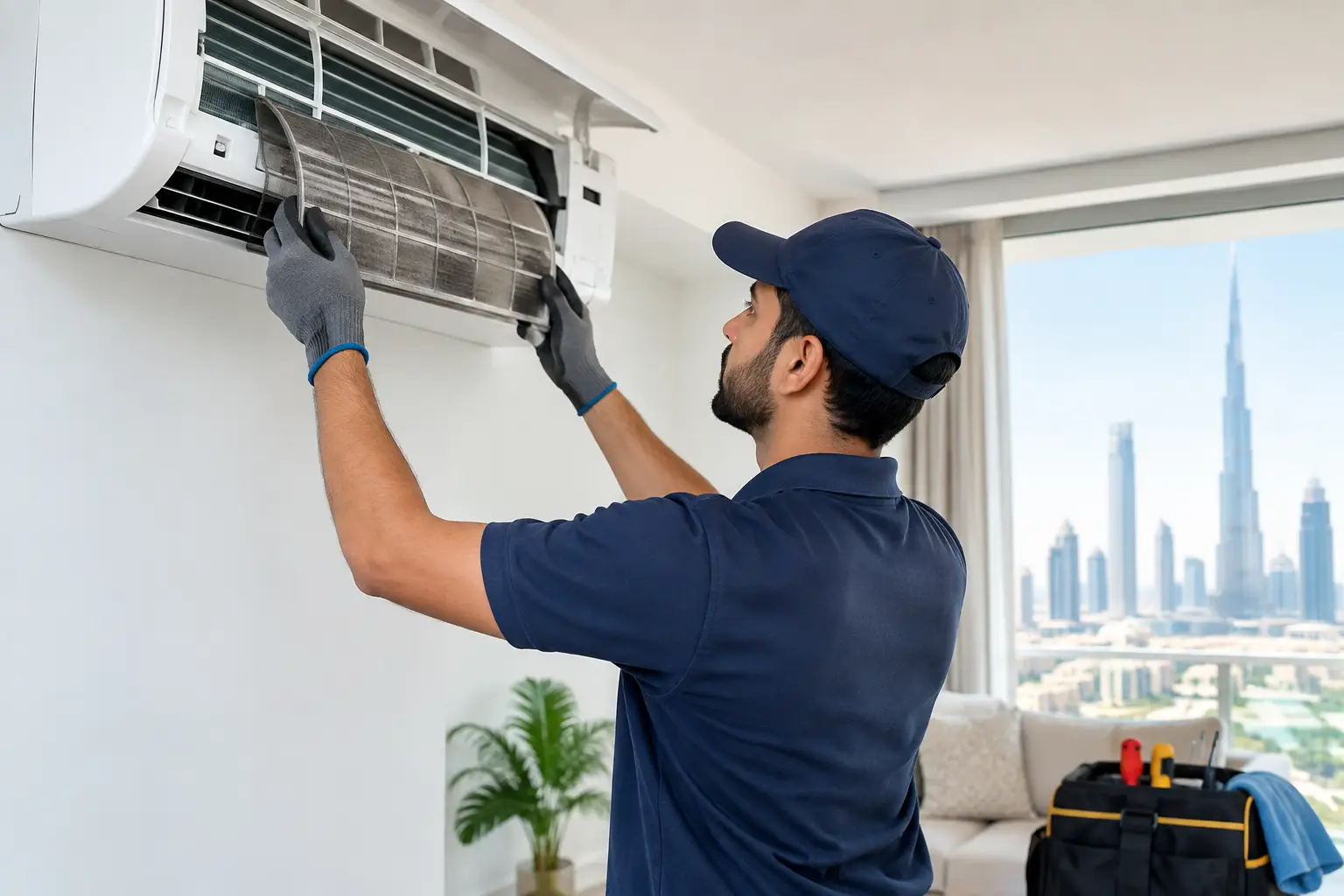
A Dubai AC system rarely gets a true break. Long cooling seasons, fine dust, high outdoor temperatures, and a busy villa household can turn a small airflow issue into an uncomfortable room or a sudden breakdown. These best AC maintenance tips focus on the checks homeowners can handle safely, plus the warning signs that call for a qualified technician.
Why AC maintenance matters more in Dubai
In many homes, the AC runs for most of the day and often supports several rooms through a central system. That constant workload means dust builds up quickly, filters clog sooner, and minor drainage or electrical issues can become more expensive if left alone.
Maintenance is not just about making a room feel colder. A clean, correctly operating system can distribute air more evenly, manage humidity, avoid unnecessary strain on major components, and help you spot faults before the unit stops during a hot afternoon. The right schedule depends on your system, household size, pets, and how often the AC runs, but regular attention is always less disruptive than an emergency call-out.
1. Check and replace filters regularly
A dirty filter is one of the most common reasons for weak airflow, dusty rooms, and higher energy use. When the filter is blocked, the system has to work harder to pull air through it. That strain can leave bedrooms feeling warm even when the thermostat is set correctly.
Check filters about once a month during heavy-use periods. Some washable filters can be gently cleaned and fully dried before reinstalling. Others need replacing. Use the filter type and size recommended for your unit, and do not assume every filter is washable.
If filters look gray, visibly dusty, or clogged with pet hair, deal with them sooner rather than waiting for the next planned service. In Dubai villas, open doors, nearby construction, and landscaping work can all make filters dirty faster.
2. Keep supply vents and return grilles clear
Furniture, curtains, storage boxes, and decorative covers can block the air paths your AC needs. Check that supply vents can push air freely into the room and that return grilles are not covered. A return grille pulls air back to the system, so obstruction can reduce circulation throughout the house.
Vacuum dust from vent covers using a soft brush attachment. Do not push tools, wires, or cleaning products deep into ducts. If a vent has very little airflow compared with other rooms, cleaning the cover may not solve the problem. The issue could be a damper, duct leak, blower problem, or a blocked coil that needs assessment.
3. Set a sensible thermostat schedule
Setting the thermostat extremely low does not cool a home faster. It simply keeps the AC running longer and can place more demand on the system. For many households, a steady setting around 75 to 77 F is a practical starting point, adjusted for comfort, insulation, and the number of people at home.
Avoid large temperature swings where possible. If the house is empty during the day, raise the setting modestly rather than switching the AC off completely in peak summer. The best approach depends on the home and its insulation, but steady operation is usually easier on both comfort and equipment than repeated hard catch-up cycles.
If one zone or room is consistently warmer, do not keep lowering the thermostat for the entire property. That can mask an airflow or control issue while increasing bills elsewhere.
4. Look for water around indoor units
Water stains on a ceiling, dripping from a wall-mounted unit, or moisture around an indoor fan coil should be treated as a maintenance issue, not normal AC behavior. The most common cause is a blocked condensate drain line, though a dirty coil, damaged drain pan, poor insulation, or an installation issue may also be involved.
Turn the unit off if water is close to electrical fittings or continues to leak. Place a towel or container underneath only as a temporary measure, then arrange inspection. Ignoring a small drip can lead to damaged paint, swollen cabinetry, ceiling repairs, mold growth, and unnecessary disruption.
5. Keep the outdoor unit area clean
Your outdoor condenser needs space to release heat. Leaves, sand, plastic bags, garden debris, or stacked items around the unit can restrict airflow and make cooling less efficient. Check the area periodically and remove loose debris from around, not inside, the unit.
Do not spray the equipment with a high-pressure hose or try to straighten the delicate metal fins yourself. Bent fins and damaged wiring can create bigger problems. Also, be careful with nearby garden irrigation. Constant water exposure or soil buildup around the base can affect the unit and its electrical connections.
For villa homes, it is also worth checking that landscaping crews have not placed planters, screens, or stored materials too close to the condenser.
6. Pay attention to changes in cooling and sound
Your AC often gives an early warning before it fails. Rooms that take longer to cool, hot and cold spots, unusual humidity, frequent cycling, rattling, buzzing, or a new musty smell all deserve attention.
A brief sound when a unit starts can be normal. Persistent grinding, loud vibration, repeated clicking, or a burning smell is not. Turn the system off and arrange professional help, particularly if you notice a burning odor, tripped breaker, or visible damage. Electrical and refrigerant work should never be a DIY task.
It helps to note when the symptom began, which rooms are affected, and whether it happens all the time or only at certain times of day. This gives the technician useful context and can speed up diagnosis.
7. Do not ignore weak airflow
Weak airflow is easy to overlook because the system may still produce cold air. But the problem can worsen gradually, leaving some rooms uncomfortable and increasing wear on the equipment. Start with the filter and visible grilles. If those are clear, the cause may be inside the system.
Dirty evaporator coils, blower issues, duct restrictions, leaking ducts, and incorrectly positioned dampers can all affect airflow. A professional maintenance visit can check these areas without guesswork. This is especially useful in larger homes where an issue in one section of ductwork may affect bedrooms far from the main unit.
8. Keep doors, windows, and basic insulation in mind
AC maintenance is partly about the house around the system. Air escaping through poorly sealed doors, sun-facing windows, or gaps around service entries makes cooling harder than it needs to be. Close windows and exterior doors firmly while the AC is running, and make sure curtains or blinds are used in rooms that receive strong afternoon sun.
This will not fix a faulty AC, but it can reduce the load on a healthy one. If a room becomes hot only in direct sun, improving shading may be more effective than changing AC settings. If it stays warm day and night, an airflow or capacity assessment is more likely needed.
9. Schedule professional servicing before peak summer
A proper AC service should go beyond a quick filter rinse. Depending on the system and its condition, a technician may inspect electrical connections, controls, drainage, coils, airflow, refrigerant performance, insulation, and components that show wear. The aim is to identify issues while they are still manageable.
For heavily used Dubai systems, preventive servicing at least twice a year is often sensible. Homes with multiple units, pets, frequent dust exposure, or recurring drainage problems may benefit from a more tailored schedule. An annual maintenance plan can make this easier by replacing last-minute decisions with planned visits and a clear record of recurring faults.
10. Know when maintenance becomes a repair
Maintenance keeps a working system in good condition. It cannot always solve a failed capacitor, damaged compressor, refrigerant leak, faulty thermostat, or major duct issue. If your AC runs but never reaches the set temperature, trips the breaker, leaks repeatedly, freezes up, or makes harsh mechanical noises, it is time for diagnosis rather than another basic clean.
Ask for a clear explanation of the fault, the recommended repair, and whether a part replacement is necessary. A dependable technician should explain the practical options without pushing unnecessary work. Homes Done Right can help Dubai households assess AC problems, schedule the right support, and move toward planned maintenance where it makes sense.
A clean filter and a quick look for leaks can take minutes, but they can prevent a stressful call-out when your home needs cooling most. Make those checks part of the household routine, and act early when the AC starts behaving differently.