

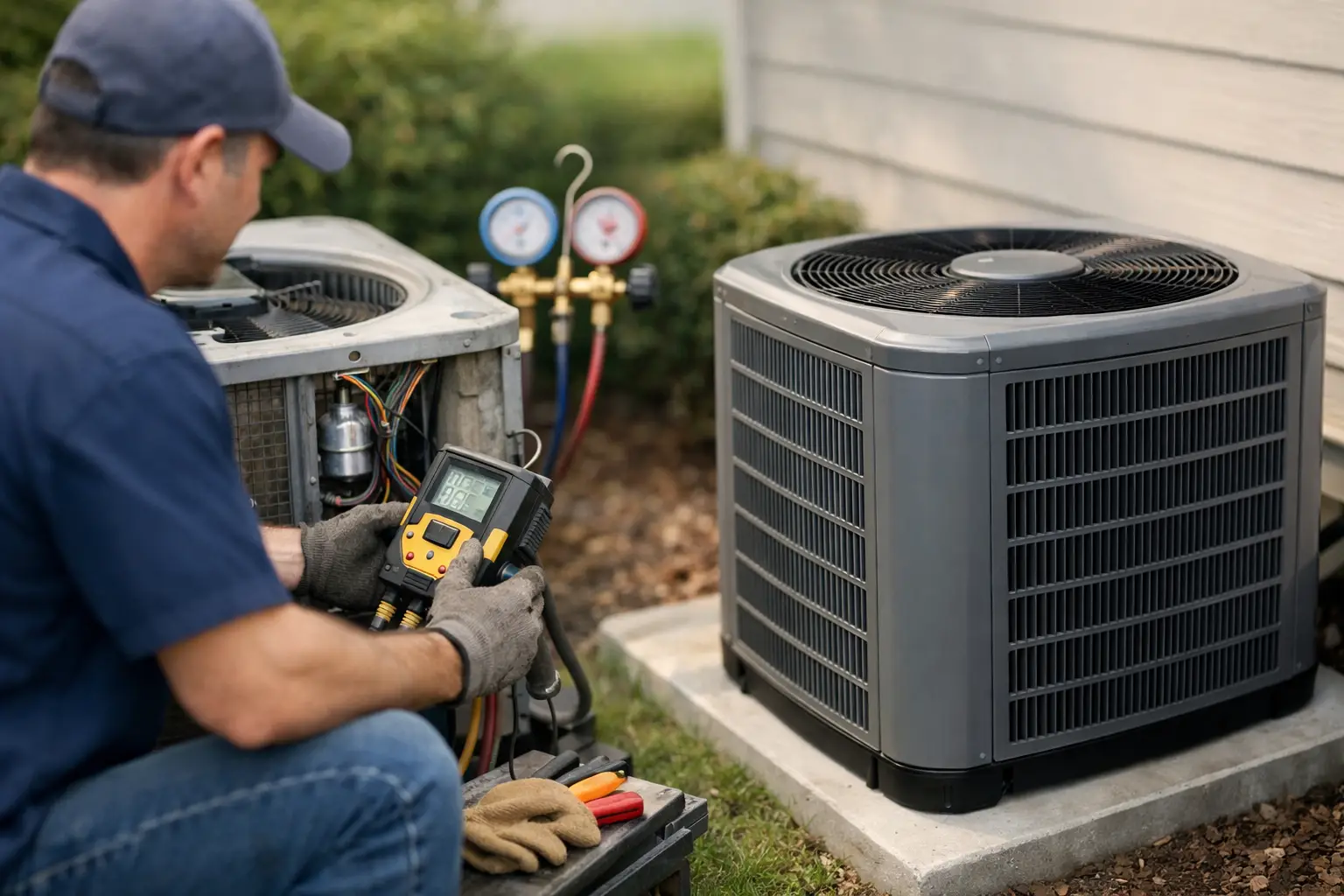
When your AC starts blowing warm air during a Dubai afternoon, AC repair versus replacement stops being a theoretical question. You need to know whether a technician can restore cooling reliably or whether you are about to spend more money keeping an aging system alive.
For villa households, the decision can affect more than one room. A weak split unit in a bedroom may be a manageable repair. Repeated failures in a central or ducted system can mean uncomfortable rooms, higher electricity bills, disrupted family routines, and another emergency call-out soon after the last one.
The right answer depends on the fault, the system's age and condition, repair history, and the cost of restoring it properly. A clear assessment is more useful than a quick guess based on age alone.
AC Repair Versus Replacement: Start With the Actual Fault
Some AC problems sound serious but are straightforward to repair. A blocked drain line, dirty filters, a failed capacitor, loose electrical connection, damaged thermostat, or worn fan motor can often be resolved without replacing the unit. If the system has otherwise cooled well, has been regularly maintained, and does not have a pattern of breakdowns, repair is usually the sensible first step.
A technician should inspect the system rather than assume the cause. Weak cooling may come from dirty coils, low refrigerant caused by a leak, poor airflow, duct leakage, an outdoor-unit issue, or incorrect thermostat settings. These faults need different solutions, and replacing an AC before identifying the real cause can be an unnecessary expense.
Ask for a plain-language explanation of what has failed, why it failed, and whether the proposed repair addresses the cause rather than only the symptom. For example, adding refrigerant may improve cooling temporarily, but it is not a lasting solution if the system has an active refrigerant leak.
When Repair Is Usually the Better Choice
Repair often makes sense when the unit is still within a reasonable working age, has not needed frequent major work, and the quoted repair cost is proportionate to its condition. Many well-maintained AC units can deliver years of dependable service after a targeted repair.
It is also reasonable to repair when a problem is isolated. Replacing a fan capacitor or repairing a drain blockage is very different from replacing a compressor or repeatedly repairing a refrigerant circuit. The key is whether the component failure is a one-off event or evidence that the system is reaching the end of its useful life.
For landlords, a sound repair can be the practical option when the unit is otherwise operating efficiently and the property needs cooling restored quickly. For homeowners, repairing a relatively young system may preserve the value of previous installation costs while avoiding unnecessary disruption.
That said, the cheapest immediate option is not always the lowest-cost decision over the next year. A minor repair is worthwhile. A series of major repairs on a struggling unit is a different situation.
Signs a repair may still be worthwhile
A repair is often a good fit if cooling was reliable until a recent fault, electricity use has not noticeably increased, the unit is not making persistent unusual noises, and there are no repeated refrigerant leaks. Clean coils, good airflow, and a service history also point toward keeping the system.
If your AC has simply been neglected, proper maintenance can make a noticeable difference. Dirty filters and coils force the system to work harder, reduce airflow, and make rooms feel warmer even when the thermostat is set correctly. Restoring cleanliness and drainage can improve performance without major replacement work.
When AC Replacement Makes More Sense
Replacement becomes more compelling when the system breaks down repeatedly, requires expensive major parts, cannot maintain comfortable temperatures, or has become inefficient despite correct repairs and maintenance. An old system that runs constantly but struggles to cool is not only frustrating - it can cost more to operate during Dubai's long cooling season.
Compressor failure is one example where the decision deserves careful thought. Compressors are among the most expensive components to replace. If the unit is older, has a history of leaks or electrical issues, and now needs a compressor, putting that money toward a new system may offer better value and reliability.
Frequent refrigerant problems are another warning sign. A properly operating sealed system should not need regular refrigerant top-ups. If leaks are recurring or difficult to repair, replacement may protect you from ongoing call-outs and uneven cooling.
You should also consider replacement when the AC no longer matches the home. A renovated room, an extension, changed insulation, new glazing, or altered use of a space can affect cooling demand. An incorrectly sized unit may short-cycle, run continuously, or leave certain rooms uncomfortable. In that case, installing the right capacity matters as much as choosing a newer model.
Replacement can reduce disruption, not just running costs
A new AC system is a larger upfront expense, but it can reduce the uncertainty that comes with an unreliable unit. This matters for families, landlords between tenants, and homeowners who do not want repeated technician visits during the hottest months.
Replacement may also improve comfort through steadier temperatures, better airflow, quieter operation, and more dependable humidity control. Those benefits are hard to measure on a repair quote, but they matter when bedrooms do not cool at night or living areas become uncomfortable every afternoon.
Consider Age, but Do Not Let It Decide Everything
Age is useful context, not a complete answer. A younger AC with poor installation, inconsistent maintenance, or unresolved leaks can develop serious problems early. An older unit that has been serviced properly and has only one isolated fault may still be worth repairing.
As a practical rule, be more cautious about large repair bills once a system is well into its expected service life. Compare the repair cost with the likely remaining life of the unit, not only with the price of a new one. If a costly repair may only buy a short period before the next major issue, replacement can be the more responsible recommendation.
A technician should also check parts availability. If components are difficult to source or no longer readily supported, a repair may take longer and offer less certainty. That can be especially inconvenient in a large villa where one failed system affects several rooms.
Compare the Full Cost, Not Only Today's Quote
Before approving repair or replacement, look beyond the first number. A repair quote should cover diagnosis, labor, parts, and any work needed to correct the underlying issue. A replacement quote should make clear what is included: removal of the old unit, installation, required electrical work, pipework or duct adjustments, controls, testing, and commissioning.
Then consider likely future costs. Has the AC required multiple visits in the past 12 to 24 months? Is the system using more electricity than it used to? Does it cool unevenly, trip breakers, leak water, or make loud noises? These details help show whether you are facing an isolated repair or an ongoing reliability problem.
For a central or ducted system, do not assume the indoor and outdoor units are the only items that matter. Duct condition, insulation, airflow balance, thermostats, and drainage can all affect performance. Replacing equipment without correcting poor airflow or damaged ducts may leave you with the same comfort complaints.
Why Preventive Maintenance Changes the Decision
Regular AC maintenance does not prevent every failure, but it gives you a clearer picture of system health before cooling problems become urgent. Cleaning filters and coils, checking drainage, inspecting electrical connections, testing performance, and identifying early wear can prevent small issues from becoming expensive ones.
For homes with several AC units, planned maintenance also makes budgeting easier. Instead of discovering every problem during peak summer, you can prioritize repairs, monitor older units, and plan replacement around the household's schedule. An annual maintenance plan can be particularly useful for villa owners who want fewer emergency decisions and one reliable point of contact.
Homes Done Right can assess AC faults, explain the practical repair options, and help Dubai homeowners decide when replacement is genuinely justified. The aim should be reliable cooling and a clear recommendation, not replacing equipment that can still be repaired properly.
Questions to Ask Before You Approve the Work
A good diagnosis should leave you able to make a confident choice. Ask what caused the fault, whether the repair is expected to last, and whether there are other signs of wear that may lead to another breakdown. If replacement is recommended, ask why repair is no longer good value and what work is included in the new installation.
It is also worth asking whether maintenance, drainage work, duct improvements, or thermostat adjustments would improve the system's performance. These details can prevent you from paying for a new AC while the actual problem sits elsewhere in the cooling setup.
A dependable decision comes from a proper inspection, an honest view of the system's condition, and a solution that suits how long you plan to keep the property. Whether the answer is a focused repair or a planned replacement, acting before a small cooling issue becomes a full summer breakdown gives your home the best chance of staying comfortable.