

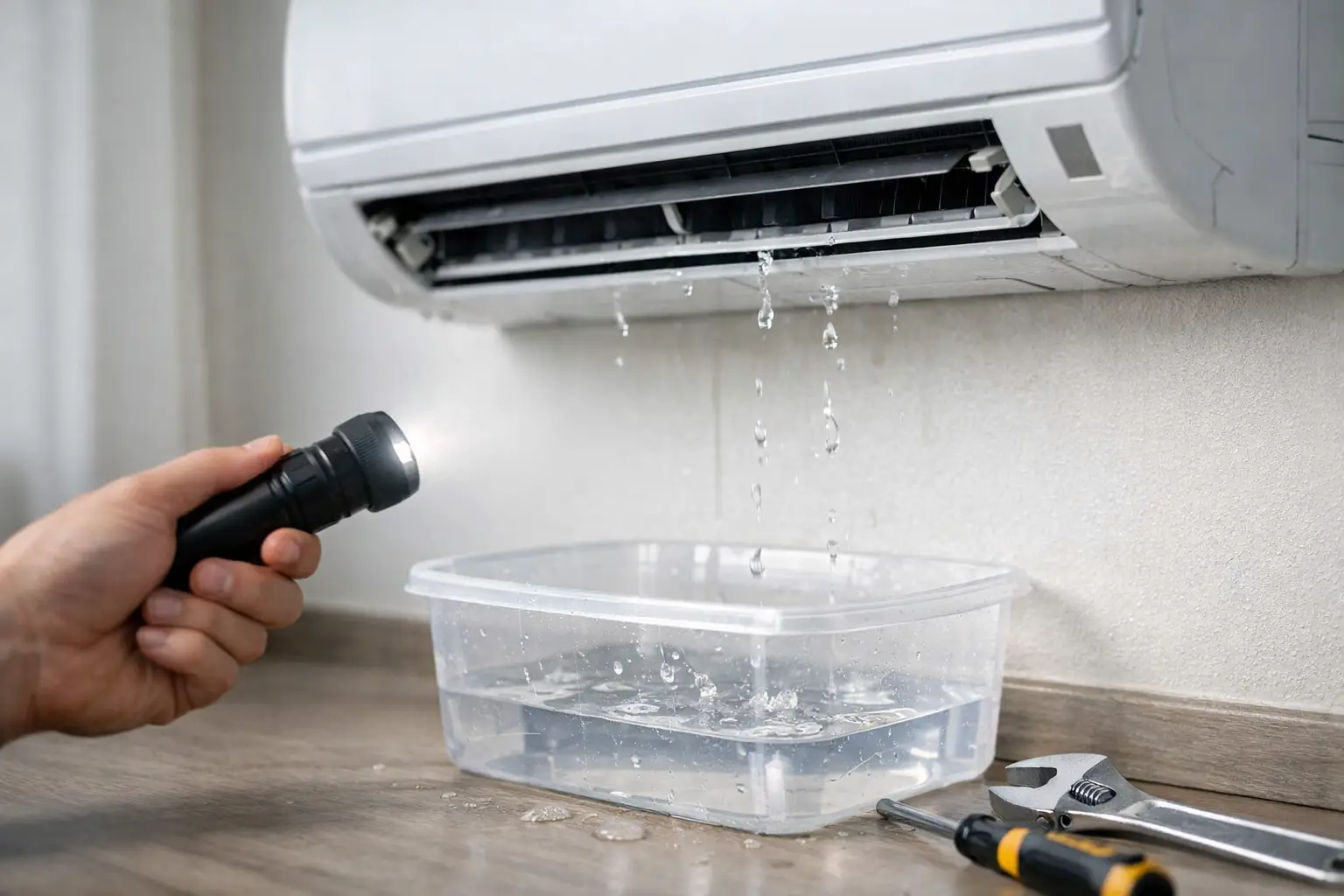
A puddle below an indoor AC unit, a drip from the ceiling, or a damp patch on the wall can quickly turn a normal cooling problem into a concern for your home. If you are asking, “why is AC leaking water,” the good news is that the water usually comes from condensation, not from the AC producing water on its own. The concern is where that condensation is supposed to go - and why it is no longer draining correctly.
In Dubai villas, AC systems work hard for much of the year. High humidity, long operating hours, dust, and missed cleaning can all contribute to drainage problems. Some causes are simple to resolve, while others need a technician before water damages ceilings, paintwork, flooring, or nearby electrical fittings.
Why Is AC Leaking Water Inside the House?
Your indoor AC unit removes heat and humidity from the air. As warm air passes over the cold evaporator coil, moisture turns into water droplets. That water should collect in a drain pan and flow through a condensate drain line to a safe outlet outside.
A leak happens when water cannot complete that route. It may overflow from a blocked pan, back up through a clogged drain line, or form excessively because the coil has frozen. The location of the water can provide a useful clue, but it does not always identify the cause on its own.
For example, dripping directly from a wall-mounted split AC often points to a drainage issue. Water appearing through a false ceiling may come from a concealed drain pipe, duct condensation, or an AC unit installed above the ceiling. In either case, it is best to act before the moisture spreads.
The Most Common Causes of an AC Water Leak
A blocked condensate drain line
This is one of the most common reasons for an AC leak in Dubai homes. Dust, algae-like buildup, construction debris, and general dirt can collect inside the drain line over time. When the line blocks, the drain pan fills and water finds the easiest way out - often through the indoor unit or ceiling.
You may notice slow dripping at first, a musty smell near the AC, or water that appears only after the unit has run for several hours. Clearing the line properly usually involves flushing and checking the full drainage route, not just removing visible dirt at the outlet.
A dirty AC filter or coil
A heavily clogged air filter restricts airflow across the evaporator coil. Without enough warm air moving over it, the coil can become too cold and freeze. Once the ice melts, the resulting water may exceed what the pan and drain can handle, causing an overflow.
A dirty coil can create the same problem. It also makes the system work harder, reduces cooling, and can raise electricity use. If your AC is leaking water and cooling less effectively than usual, poor airflow should be checked.
A frozen evaporator coil
Ice on the indoor coil is not a normal part of AC operation. It can result from a dirty filter, a dirty coil, a faulty fan, blocked airflow, or low refrigerant. The last two causes require professional diagnosis.
Avoid simply turning the AC back on after the ice melts. The water may stop temporarily, but the underlying reason for the freeze can return and lead to another leak. Continued operation can also put added strain on the system.
A cracked, rusted, or misaligned drain pan
The drain pan sits below the evaporator coil and catches condensation before it reaches the drain line. Older pans can crack or corrode, while an improperly positioned pan may not guide water toward the drain opening.
This issue can be difficult to spot, particularly in ducted or concealed units. A technician may need to open an access panel to inspect the pan, connection points, and surrounding insulation.
Incorrect installation or a drain line with the wrong slope
Condensate drains rely on gravity unless the system has a condensate pump. If the drain pipe is not sloped correctly, has a sag, or was installed with a poor connection, water can pool and back up into the indoor unit.
This is more likely to show up after a new installation, renovation, or ceiling work. A unit may cool normally while still leaking because the problem is with the drainage layout rather than the cooling components.
A faulty condensate pump
Some indoor units, especially those located where gravity drainage is not possible, use a small pump to move water to the drain point. If the pump fails, loses power, or has a blocked reservoir, condensate has nowhere to go.
A pump-related leak may be intermittent. You might hear unusual clicking or notice water only during longer AC cycles. Because the pump and its electrical connections need to be assessed safely, this is a job for an AC technician.
Condensation on poorly insulated ducts or pipes
Not every “AC leak” comes from the unit itself. In humid conditions, cold refrigerant pipes or air ducts can sweat if their insulation is damaged, thin, or missing. The water may drip from a ceiling vent, pipe casing, or duct connection.
This can look similar to a drain issue, but the repair is different. The affected insulation needs to be repaired or replaced, and the technician should check for air leaks that allow humid air to reach cold surfaces.
What to Do When Your AC Starts Leaking
Start by protecting your home. Place a bucket or towels under the drip if it is safe to do so, and move rugs, furniture, electronics, and valuables away from the area. If water is near a light fitting, power outlet, electrical panel, or ceiling fixture, switch off the AC and avoid touching wet electrical areas.
Next, turn the thermostat off or set the system to fan-only mode if available. This helps prevent more condensation from forming and gives a frozen coil time to thaw. Do not chip ice from the coil or push wires, tools, or chemicals into a drain line.
You can check the air filter if it is easily accessible. If it is visibly gray, dusty, or blocked, remove it according to the unit instructions and clean or replace it as appropriate. A clean filter is useful preventive maintenance, but it will not solve a cracked pan, a bad pump, a refrigerant issue, or a deep drain blockage.
Take note of when and where the leak occurs. Is the AC still cooling? Does water appear only after several hours? Is it clear water, or does it have dirt or an odor? These details help a technician diagnose the issue faster.
When to Call for AC Repair Right Away
A small amount of condensation outside is normal. Water leaking from an indoor unit, wall, ceiling, or vent is not something to ignore. Arrange professional AC service promptly if the leak keeps returning, cooling has dropped, ice is visible, the ceiling is wet, or there is any chance water has reached electrical components.
You should also call if you have cleaned the filter and the unit still leaks. Repeatedly restarting a leaking AC can turn a minor drain service into damaged gypsum board, peeling paint, mold growth, or a more expensive repair.
For Al Qudra households, Homes Done Right can inspect the unit, drainage line, filters, coil condition, and installation-related issues, then explain what needs repair before work begins. Same-day help is especially useful when water is spreading or the home depends on that AC unit for daily comfort.
How to Help Prevent Future AC Leaks
Regular AC cleaning and maintenance are the most practical way to reduce drainage problems. Filters need attention more often in dusty conditions, while coils, drain pans, drain lines, and insulation need periodic inspection as part of a complete service.
The right schedule depends on how often your AC runs, the type of system, whether you have pets, nearby construction dust, and how well the home is sealed. In a large villa with multiple units, preventative visits can also catch a slow drain problem in one area before it becomes ceiling damage in another.
A leaking AC does not always mean a major failure, but it is always worth checking early. Stopping the drip today can protect the cooling system and the parts of your home that should never have to handle water.