

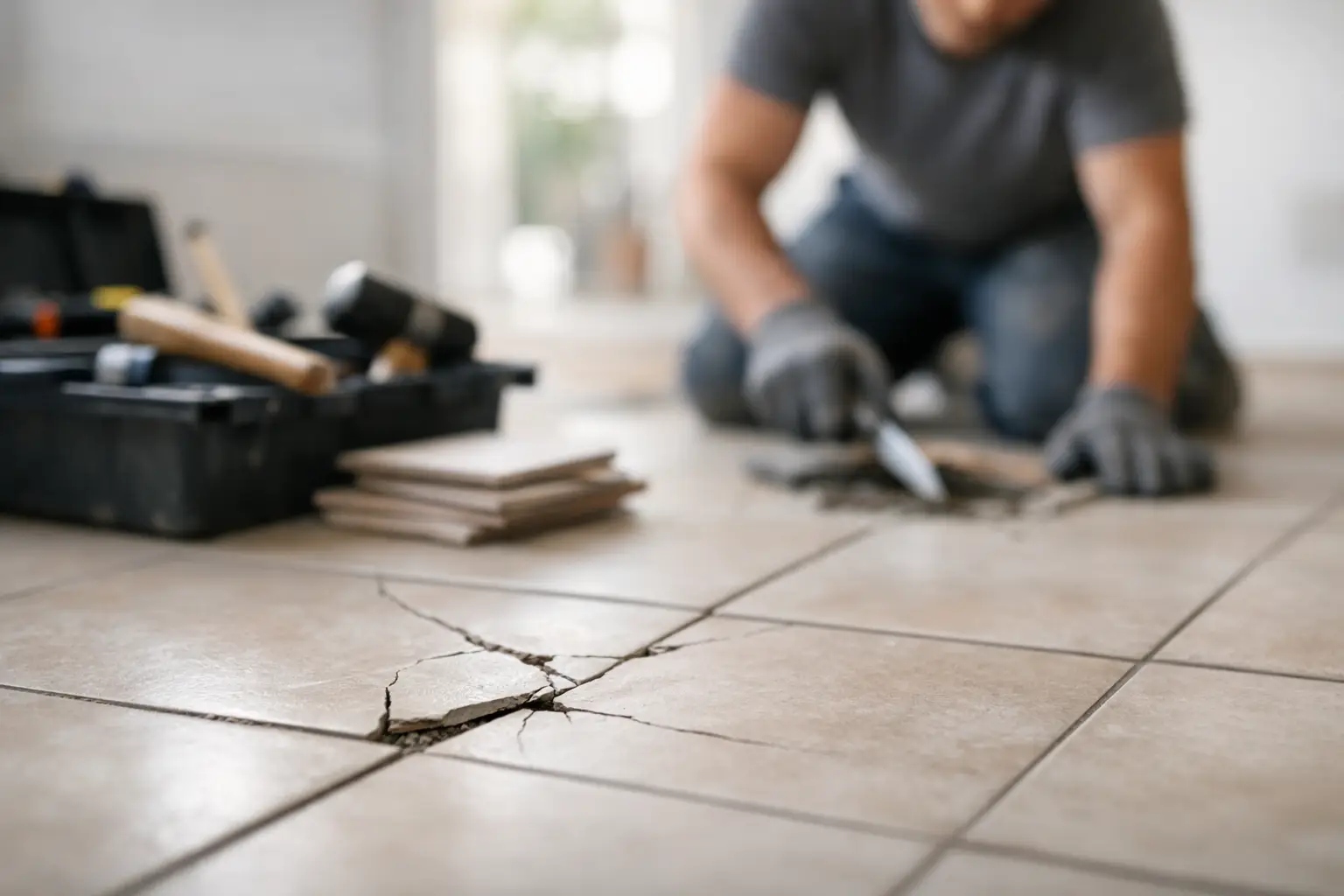
A crack across a floor tile may look like a small cosmetic problem, but it can become a sharp edge, a moisture entry point, or a clue that the surface beneath the tile is moving. Knowing when to replace cracked tiles helps you deal with the real issue before a simple repair turns into damaged grout, loose tiles, or water damage below the surface.
For Dubai villa households, tiled floors and walls work hard. Heat, temperature changes from AC use, heavy furniture, dropped items, plumbing leaks, and normal settlement can all affect tile finishes over time. The right response depends on the type of crack, where it is located, and whether the surrounding tiles are stable.
When to Replace Cracked Tiles Instead of Repairing Them
A tile generally needs replacing when the crack runs through the full tile, especially if it has created separate pieces, raised edges, or a loose section. Filling a deep crack may improve its appearance temporarily, but it will not restore the tile's strength. In a busy kitchen, hallway, bathroom, or villa entrance, that can create a trip hazard and allow dirt and water to collect inside the damaged area.
Replacement is also the better option when a tile has chips around the crack, feels loose underfoot, or makes a hollow sound compared with nearby tiles. These signs can mean the adhesive bond below has failed. A new tile installed over an unstable base is unlikely to stay secure for long, so the underlying surface should be checked before replacement begins.
On walls, replace a cracked tile if it is near a shower, bathtub, sink, or kitchen backsplash where regular water exposure is likely. Water can pass through cracks and damaged grout, reaching the wall behind. You may not see the damage immediately, but repeated moisture can weaken adhesive, stain adjacent areas, and create a more involved repair later.
Cracks that need prompt attention
Arrange an assessment soon if you notice several cracked tiles in the same area, cracks that continue through grout lines, tiles lifting at the edges, or new cracks appearing after a leak. These patterns are not usually caused by one dropped object. They can point to movement in the screed, poor installation, trapped moisture, or changes in the surface below.
A cracked tile around a toilet, shower drain, washing machine connection, or outdoor water point also deserves quick attention. In these locations, it is sensible to rule out a plumbing issue before treating the tile as an isolated finish problem.
When a Cracked Tile Can Stay in Place
Not every visible line means a tile must be removed. Fine surface crazing in the glazed finish is often cosmetic, particularly on older ceramic wall tiles. If the tile is firmly attached, the line does not catch your fingernail, and there is no sign of moisture or movement, replacement may not be urgent.
A small chip at the corner of a wall tile can sometimes be repaired with a color-matched epoxy or touch-up compound. This works best in dry, low-contact areas, such as a guest bathroom wall or decorative tiled section. It is less suitable for floor tiles, shower walls, and heavily used kitchen surfaces, where a patch can discolor, wear down, or trap moisture around its edges.
The trade-off is simple: a cosmetic repair can save time and avoid disturbing surrounding tiles, but it does not solve a structural crack. If you are unsure whether a crack is only on the surface, a technician can assess the tile's condition and the base underneath it.
What Caused the Tile to Crack?
Finding the cause matters as much as replacing the visible tile. Otherwise, the same problem can return in the same spot or spread across the room.
Impact damage is the most straightforward cause. A heavy pan, tool, furniture leg, or hard object can chip or crack one tile while the tiles around it remain secure. In this case, replacing the individual tile is usually enough if the subfloor and adhesive are sound.
Movement beneath the tile needs closer attention. Floors can shift slightly as buildings settle, materials expand and contract, or screed develops cracks. In Dubai, large differences between outdoor heat and cooled indoor spaces can add stress, particularly near glass doors, balconies, and sun-exposed rooms. Poorly placed movement joints or insufficient adhesive coverage can make this worse.
Water is another common cause. A slow leak beneath a bathroom floor, behind a shower wall, or under a kitchen sink can weaken tile adhesive. Look for loose grout, hollow-sounding tiles, damp marks on nearby walls or ceilings, mildew smells, or changes in water pressure. Tile replacement should follow the leak repair, not come before it.
Check the Area Before Replacing a Tile
Before work begins, look beyond the cracked tile. Press gently on nearby tiles to see whether they move. Tap them lightly with a hard plastic handle and compare the sound with tiles farther away. A hollow sound does not always mean immediate failure, but a cluster of hollow tiles may indicate poor bonding or moisture below.
Check the grout as well. Crumbling, cracked, or missing grout can allow water and cleaning chemicals to reach the edges of the tile. In wet areas, failed sealant around shower trays, bathtubs, and countertops can contribute to the issue even when the tiles themselves look mostly intact.
If the damage is limited to one tile and there are no moisture or movement signs, a straightforward replacement is usually possible. If several tiles are affected, it may be worth opening a small area to inspect the base rather than repeatedly replacing individual tiles.
Do you have matching spare tiles?
Many homeowners keep leftover tiles after construction or renovation, and these are often the best match. Even tiles from the same product range can vary slightly between batches. If no spares are available, a technician may be able to source a close match, but an exact color, pattern, and finish cannot always be guaranteed.
For a highly visible floor or feature wall, replacing one tile with a near match can look worse than addressing a larger section. In a less visible area, such as a utility room or behind a door, a close match may be perfectly practical. Sometimes a tile can also be taken from a concealed location and replaced there with a less noticeable alternative.
What Professional Tile Replacement Involves
Proper tile replacement is more than breaking out the damaged piece and sticking in another one. The surrounding grout is first cut back carefully to reduce the chance of damaging neighboring tiles. The cracked tile is then removed in small sections, with attention to the waterproofing or substrate below.
Old adhesive needs to be cleared so the new tile sits level with the surrounding surface. The technician should inspect the base for moisture, cracks, or weak areas before applying fresh adhesive and setting the replacement tile. After the adhesive has cured, the joints can be grouted and perimeter sealant renewed where needed.
This approach takes more care than a quick patch, but it reduces the risk of lippage, loose edges, and repeat cracking. Homes Done Right can help assess whether your damaged tile is an isolated repair or a sign that plumbing, waterproofing, or the underlying surface needs attention.
When to Treat Cracked Tiles as an Urgent Repair
A cracked tile becomes more urgent when it creates an immediate safety or water-risk issue. Do not leave sharp, loose, or rocking floor tiles in areas used by children, older family members, or anyone walking barefoot. Cover the area temporarily, avoid putting weight on it, and arrange a repair.
Act quickly if water is visibly pooling through a crack, if tiles are lifting near a bathroom or kitchen leak, or if you see staining on the ceiling below a tiled bathroom. In these cases, the priority is to stop and identify the water source. Replacing tiles before the area is dry and the cause is resolved can waste time and money.
Outdoor tiles around pools, patios, and entrances also need attention when they crack or loosen. Water can enter below the surface, and uneven tiles can become a slip or trip risk. Outdoor repairs may require consideration of drainage, expansion gaps, and the condition of the screed rather than just the tile itself.
Help Your New Tiles Last Longer
Avoid dragging heavy furniture across tiled floors, and use protective pads under chair and table legs. Deal with leaking taps, shower sealant failures, and slow drains early, especially in bathrooms and kitchens. Regular checks are useful in larger villas where a small issue in a guest bathroom or utility area may go unnoticed for weeks.
If you are planning a renovation, ask how the installer will prepare the substrate, allow for movement, and waterproof wet areas. The finish matters, but much of a tiled surface's lifespan depends on the work beneath it.
A cracked tile does not always mean a major project. But when the crack is deep, loose, spreading, or connected to moisture, early professional assessment is the practical way to protect the rest of the room and keep a manageable repair from becoming a larger one.