

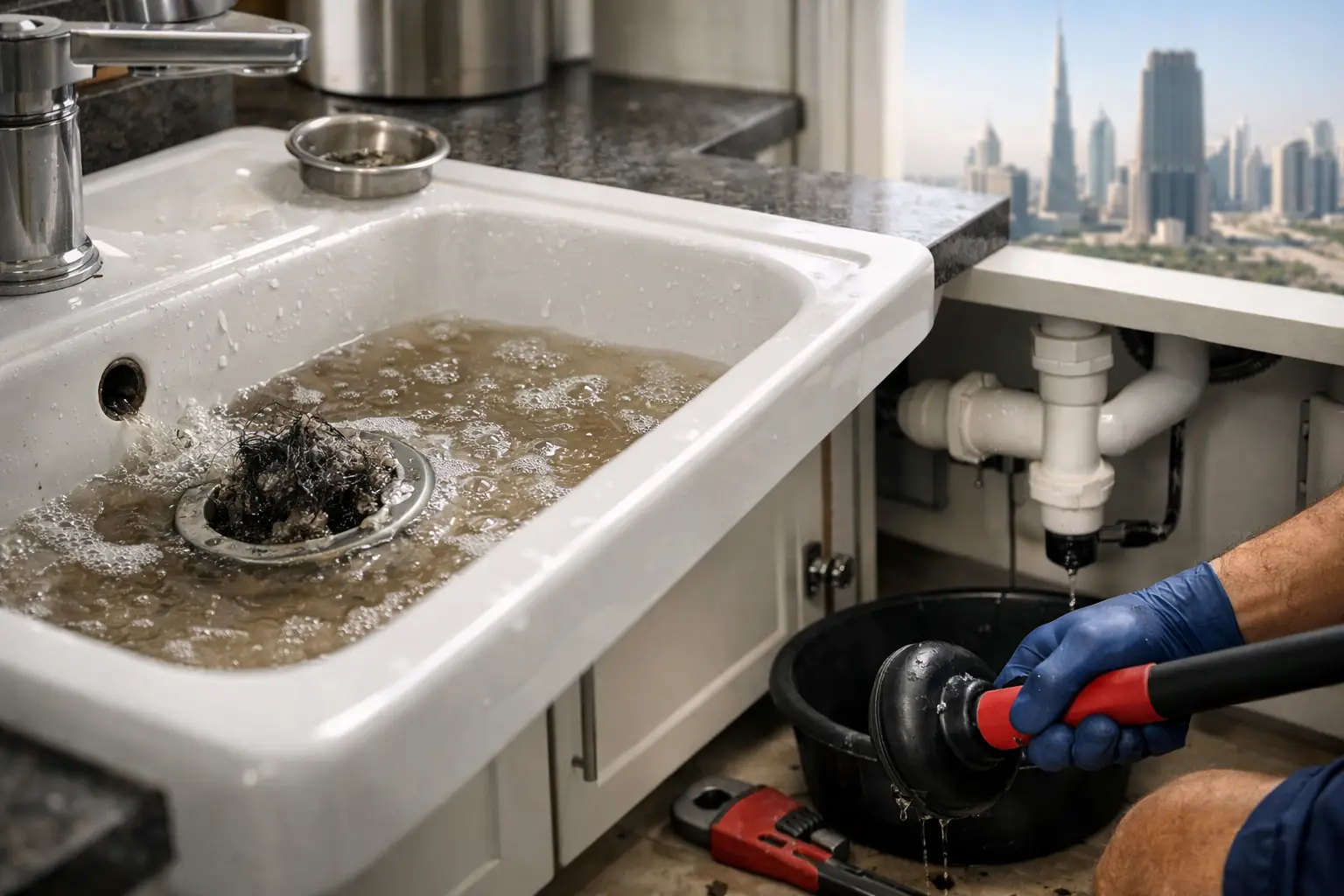
A drain that blocks once can be an inconvenience. A drain that blocks again a few weeks later is usually a sign that the original problem was only partly cleared. Recurring drain blockage causes are often hidden inside the pipework, where everyday residue builds up or where a drainage fault needs professional attention.
For villa households in Dubai's Al Qudra communities, repeated blockages can affect kitchen sinks, shower drains, bathroom basins, floor drains, and outdoor gullies. The right fix depends on where the blockage is happening, how quickly water backs up, and whether other drains in the home are also affected.
Why the Same Drain Keeps Blocking
A plunger or drain-cleaning product may restore flow temporarily, but it does not always remove the full obstruction. Water then finds a narrow path through the debris until more material catches and the drain slows again. This is why a blockage can seem resolved on a Saturday and return before the month ends.
The location matters. If only one bathroom sink drains slowly, the issue is likely close to that fixture. If a shower, toilet, and basin in the same area all begin draining poorly, the obstruction may be farther down the branch line. When multiple parts of the property are affected, the main drainage line or an external inspection point may need checking.
Grease and food residue in kitchen pipes
Kitchen sink blockages rarely come from one large item. They build gradually as cooking oil, grease, coffee grounds, food scraps, and dishwashing residue stick to the inside of the pipe. Grease can look harmless when it is warm and liquid, but it cools as it travels through the line and creates a sticky surface for other debris.
This is especially common in busy family kitchens. Rinsing plates before loading the dishwasher helps, but oils and sauces still need to go into a container or the trash rather than down the sink. A sink that gurgles, smells unpleasant, or drains slowly after washing up may have buildup beyond the trap under the cabinet.
Hair, soap, and product buildup in bathrooms
Hair is one of the most common causes of repeated shower and bathroom sink blockages. It binds with soap residue, shampoo, conditioner, and mineral deposits to form a dense mass that sits just below the drain cover or deeper in the waste pipe.
Removing visible hair from the drain cover helps, but it may not be enough if water has been slow for some time. In showers, the blockage is often a few feet down the pipe, where a simple surface clean cannot reach. Thick creams and products that do not rinse easily can add to the problem.
Wipes and unsuitable items in toilets
Toilets are designed for toilet paper and human waste. Wipes, cotton pads, sanitary products, dental floss, paper towels, and small plastic items can catch inside bends or joins. Products labeled flushable can still cause trouble in residential drainage systems because they do not break apart as quickly as toilet paper.
A toilet that repeatedly needs plunging should not be treated as normal. The obstruction may be partly lodged in the toilet trap, or it may be farther along the pipe where repeated flushing only shifts it temporarily.
Less Obvious Recurring Drain Blockage Causes
Not every recurring blockage is caused by what goes down the drain. Older pipework, poor installation, and outdoor debris can all create a repeating problem, even when a household is careful.
Scale buildup and narrow pipe interiors
Dubai's water can contribute to mineral scale over time. Scale does not usually create a sudden complete blockage by itself, but it can reduce the effective width of a pipe. Once the interior is rougher and narrower, grease, hair, and soap residue have more places to cling to.
A standard drain cleaner may not deal with this type of buildup, and frequent use of harsh chemicals can damage certain pipes, seals, or fittings. Mechanical cleaning or professional drain clearing is often a better choice when scale and residue are the likely issue.
Pipe damage, poor slope, or displaced joints
Drainage pipes need a consistent slope so wastewater can move away from the property. If a section of pipe has settled, cracked, sagged, or been installed at the wrong angle, solids can collect at that point. The same drain then blocks repeatedly because the underlying pipe condition remains unchanged.
This type of issue is more likely when blockages return soon after professional clearing, when there is a persistent bad smell, or when water backs up without a clear household cause. A technician may need to inspect the line with suitable equipment before recommending repair work. Clearing the pipe is still useful, but it is not the complete answer if the pipe itself is failing.
Tree roots and outdoor drainage debris
Outdoor drains, garden gullies, and main lines can collect leaves, soil, sand, and other debris, particularly after landscaping work or heavy rain. Tree roots may also enter small gaps in underground drainage pipes and continue growing where moisture is available.
An external blockage can show up indoors first. For example, a ground-floor bathroom drain may back up even though nothing unusual has gone down that drain. If this happens alongside pooling water near an outdoor drain cover, it is best to arrange an inspection rather than keep trying indoor remedies.
Signs You Need More Than a Quick Drain Clean
A slow drain is often manageable early on, but repeated symptoms should be taken seriously. Call for plumbing help if you notice water backing up into another fixture, bubbling or gurgling sounds, sewage odors, standing water that does not clear, or more than one drain slowing at the same time.
You should also avoid repeatedly pouring chemical drain openers into a blocked line. These products can be useful in limited situations, but they may not reach a solid blockage. If they remain in standing water, they can create a safety risk for anyone later opening the pipe or working on the drain.
For a single, minor blockage, start by removing visible debris and cleaning the drain cover. In a kitchen, check and clean the trap only if you are comfortable doing so and can place a bucket underneath. If the blockage returns, professional clearing is usually more cost-effective than repeatedly buying temporary fixes and risking water damage.
How to Reduce Repeat Blockages
Small habits make a real difference, especially in a larger home with several bathrooms and frequent kitchen use. Use sink strainers to catch food and hair, and empty them before debris gets pushed into the line. Collect cooled cooking oil and discard it with household waste. Keep wipes and hygiene products out of toilets, regardless of packaging claims.
Bathroom drains benefit from routine cleaning before the water flow changes. This can be as simple as lifting out caught hair from the cover each week. Outdoor drain covers should also be kept clear of leaves, soil, and landscaping material.
Preventive maintenance is particularly useful for homes that have had prior drainage issues, active landscaping, or frequent use by a large family. It allows a technician to identify buildup or early drainage concerns before a blocked line disrupts the household. For homeowners who prefer planned support instead of emergency callouts, an AMC plan can make routine checks easier to schedule.
When a Same-Day Plumber Is the Right Call
A recurring blockage is not always an emergency, but it becomes urgent when wastewater is backing up, a toilet cannot be used, or a leak is forming beneath a fixture. In those cases, stop using the affected drain where possible. Running more water through the system can increase overflow and make cleanup more difficult.
Homes Done Right can help Al Qudra residents identify whether the issue is local to one fixture or part of a wider drainage problem. A clear diagnosis matters because the right solution may be simple drain clearing, trap cleaning, mechanical removal of buildup, or further investigation of the pipework.
A drain should not become another household chore you keep revisiting. If it has blocked twice, treat the third occurrence as a reason to find the cause, not just clear the symptom.