

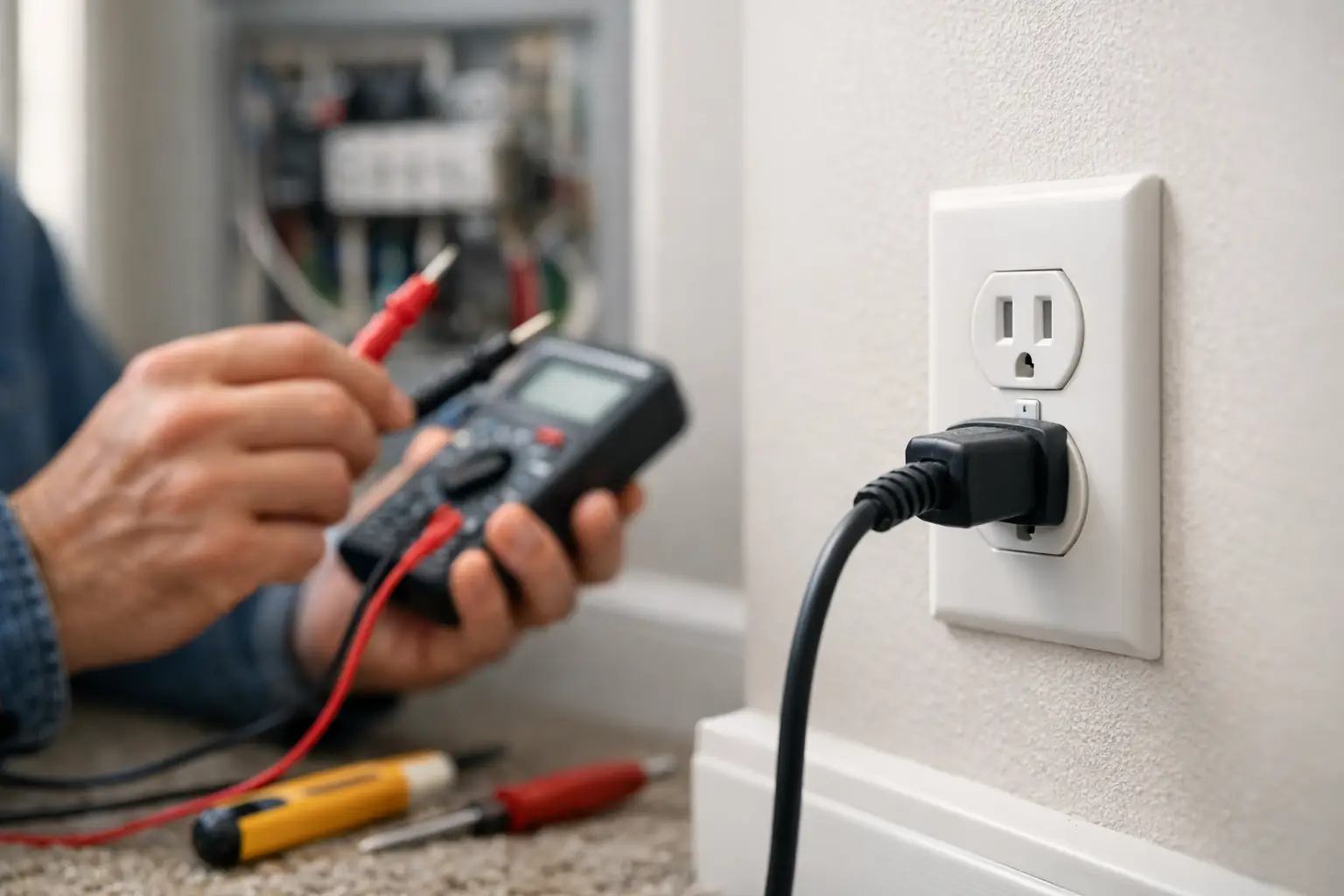
A power outlet not working is more than an inconvenience when it takes out a phone charger, Wi-Fi router, kitchen appliance, or pool pump controller. In a Dubai villa, one outlet can also be part of a larger circuit serving several rooms or outdoor areas. The good news is that the cause is often straightforward. The key is knowing which checks are safe to make yourself and when an electrical fault needs a qualified technician.
Start by ruling out the appliance
Before assuming the outlet has failed, test the item you plugged in. Try it in another known-working outlet, or plug a simple device such as a lamp or phone charger into the affected outlet. If the appliance does not work elsewhere, the appliance or its cable is likely the issue.
If another device also receives no power from the outlet, stop using that outlet and look for clues. Is it the only outlet affected? Did the issue begin after using a high-power appliance, such as a kettle, iron, heater, vacuum, or outdoor equipment? These details help identify whether the problem is local to the outlet or related to the circuit supplying it.
Do not keep plugging in devices repeatedly if you notice heat, a burning smell, buzzing, discoloration, sparks, or a loose faceplate. Switch off the relevant circuit if you can do so safely, keep the outlet clear, and arrange an electrical inspection.
Check the circuit breaker and RCD
A tripped breaker is one of the most common reasons for a dead outlet. Your electrical distribution board may be in a utility room, garage, hallway cupboard, or external service area, depending on the property. Look for a breaker that has moved to the off position or is sitting between on and off.
To reset it, first unplug devices connected to the affected circuit. Move the breaker fully to off, then back to on. If it stays on and power returns, reconnect appliances one at a time. If the breaker trips again after a particular item is connected, that appliance may be faulty or overloaded.
Many Dubai homes also have an RCD or earth-leakage safety switch. This protective device cuts power when it detects an electrical imbalance that could create a shock risk. A tripped RCD can affect several outlets, sometimes across more than one room. Resetting it may restore power, but an RCD that trips repeatedly should not be ignored. Moisture, damaged wiring, a faulty appliance, or an outdoor electrical issue can all be responsible.
Avoid opening the distribution board, removing covers, or touching wiring. Resetting a clearly labeled switch is reasonable for a homeowner. Diagnosing why it continues to trip is work for an electrician.
Look for a tripped GFCI or safety outlet
Some outlets have built-in protection and include TEST and RESET buttons. They are commonly found near water, including kitchens, bathrooms, laundries, garages, balconies, and outdoor spaces. In some properties, one protected outlet controls other outlets further along the circuit, so the outlet that has stopped working may not be the one with the reset button.
Press RESET firmly once. If the outlet resumes working and stays on, the issue may have been a temporary trip. If it will not reset, immediately trips again, or feels warm, do not force it. Water exposure and electrical circuits are not a combination to troubleshoot by trial and error.
Outdoor outlets deserve particular care. Dubai’s dust, irrigation overspray, cleaning water, humidity, and heat can affect damaged covers, seals, and connections over time. An outdoor outlet should have a suitable weatherproof cover and should never be used when wet or visibly damaged.
Why one outlet may fail while others still work
When a single outlet has no power but nearby lights and outlets do, the problem may be inside that outlet or at another connection on the same circuit. Loose terminals, worn internal contacts, heat damage, or a failed connection upstream can interrupt power.
Older outlets and heavily used outlets are more likely to wear out. A plug that slips out easily, sits loosely, or only works when held at a certain angle is not normal. It can create arcing, where electricity jumps across a poor connection and generates heat. That is a fire risk, not a minor annoyance.
In villas, extensions, garden rooms, maid’s rooms, garages, kitchens, and external areas may have been altered during fit-outs or previous repairs. That does not automatically mean the work is unsafe, but it does mean the circuit layout may be less obvious. A technician can trace the supply, test the outlet, and confirm that protective devices and connections are operating correctly.
Common causes of a power outlet not working
The cause depends on the symptoms, but the most frequent issues are usually practical rather than mysterious:
- A tripped circuit breaker caused by overload or a fault
- An RCD or GFCI outlet that has tripped for safety
- A failed appliance, plug, extension lead, or charger
- A loose, worn, overheated, or damaged outlet connection
- Moisture affecting an outdoor, kitchen, laundry, or bathroom circuit
- A wiring fault or damaged cable within the wall
A breaker that trips once after too many high-load appliances are used on one circuit may simply be doing its job. A breaker or RCD that trips repeatedly, however, needs proper testing. Resetting it again and again can mask a developing fault and leave the underlying cause unresolved.
What not to do
It is tempting to remove the outlet cover and see whether a wire has come loose. Do not do this. Even if the outlet appears dead, the circuit may still be live, incorrectly labeled, or connected through another route. Electrical diagnosis requires the right test equipment and the knowledge to use it safely.
Do not replace a breaker with a higher-rated one to stop trips. Breakers are selected to protect the wiring, and increasing the rating without assessing the circuit can create overheating behind walls. Also avoid relying on multi-plug adapters and extension leads as a permanent solution, especially for high-load appliances. They can overload an outlet that was never intended to carry that demand continuously.
If a plug has melted, the outlet is blackened, or you smell burning, turn off power at the relevant breaker if it is safe to identify, keep people away from the area, and call for urgent professional help. If there is smoke or fire, leave the area and contact emergency services.
When to book an electrician
A qualified electrician should assess the issue if the outlet remains dead after basic checks, the breaker or RCD will not stay reset, or multiple outlets have lost power. You should also book help promptly for outlets near water, any signs of overheating, a loose socket, recurring shocks or tingling sensations, or electrical problems after a leak.
For landlords and busy households, a clear diagnosis matters as much as restoring power. The technician should identify whether the fault is the outlet, appliance, circuit, safety device, or wiring, then explain the repair before work proceeds. That avoids replacing a socket when the real problem is further back on the circuit.
Homes Done Right can help Dubai households assess outlet faults, replace damaged fittings where appropriate, and investigate recurring trips or loss of power with a professional electrical visit. Booking early is particularly sensible when the affected outlet supports essential equipment, kitchen appliances, home office devices, or outdoor systems.
Reduce the chance of another outlet failure
A few everyday habits make a real difference. Use high-power appliances on suitable dedicated outlets where possible, do not overload extension leads, and replace worn plugs and chargers rather than taping or forcing them into use. Check outdoor outlets after heavy cleaning, irrigation issues, or storms, and keep covers closed when they are not in use.
For larger villas, preventative electrical checks can be useful before summer, before moving in, after renovation work, or when taking over a rental property. This is especially true if circuits trip without a clear pattern or if there are older outlets in kitchens, utility rooms, and external areas. An annual maintenance plan can also help households address small electrical concerns before they become urgent call-outs.
A dead outlet may have a simple explanation, but the warning signs matter. Make the safe checks, avoid opening anything electrical, and treat heat, repeated tripping, or water exposure as a reason to get the fault properly assessed.