

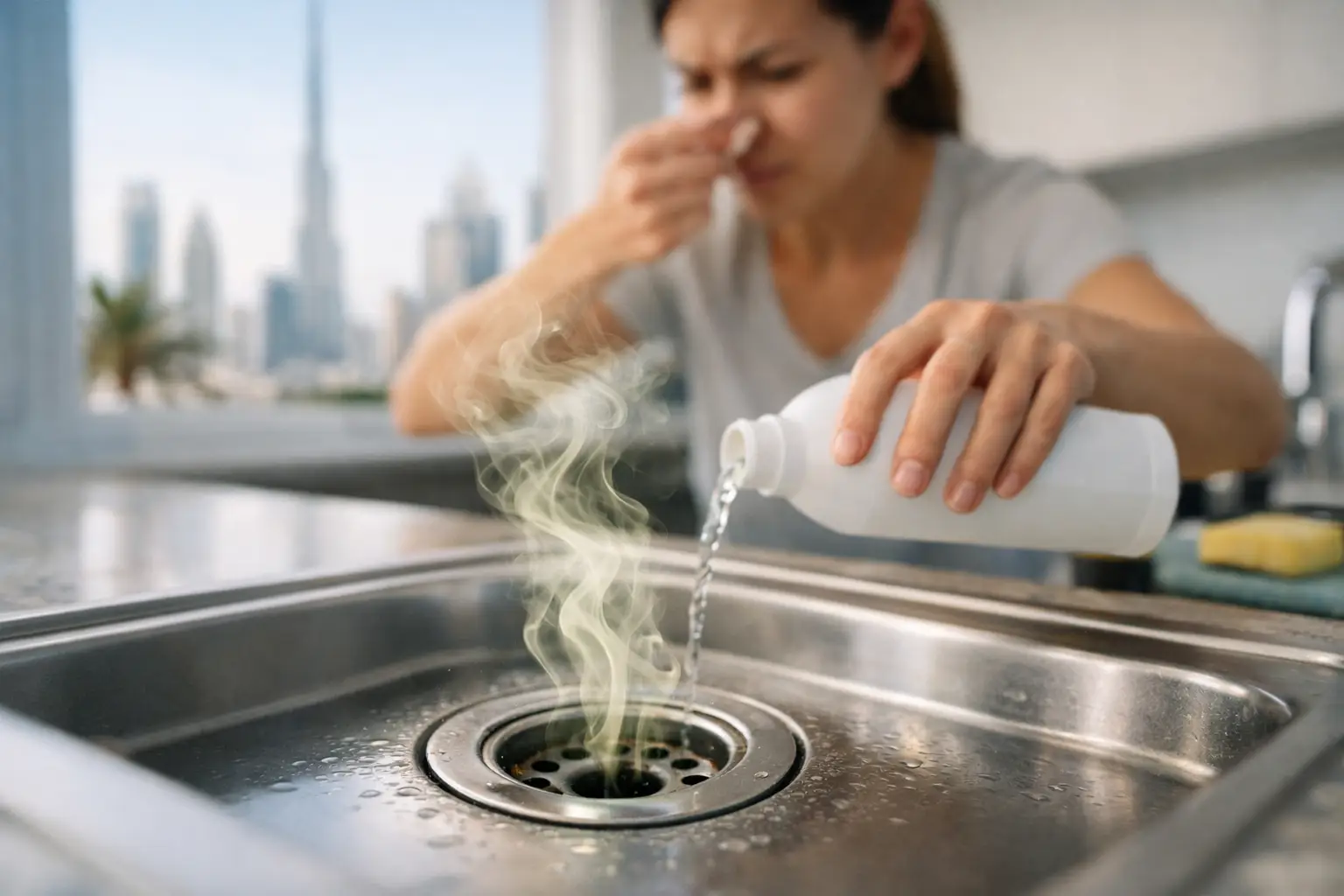
A drain can smell unpleasant even when water is still flowing normally. In a villa, that odor may come from a guest bathroom used only occasionally, a kitchen sink after heavy cooking, or an outdoor floor drain exposed to dust and heat. Knowing how to remove drain odor starts with identifying where the smell is coming from and whether it is a simple dry trap or a sign of a blockage that needs attention.
Most drain odors can be handled safely with a few practical checks. However, a persistent sewage-like smell, slow drainage, or repeated odor in the same area deserves a professional inspection. Treating the smell without addressing the cause can allow a small plumbing problem to become a more disruptive repair.
Why Drains Start to Smell
Your plumbing system is designed to keep sewer gases out of the home. Each sink, shower, floor drain, and toilet connects to a drainpipe, but a curved section of pipe called a P-trap holds water between the drain opening and the sewer line. That standing water creates a seal that blocks odors.
When the trap dries out, the seal is lost and sewer gas can move back through the drain. This is especially common in unused bathrooms, laundry rooms, maid's rooms, and outdoor areas. Dubai's hot weather can make the water in an infrequently used drain evaporate faster than many homeowners expect.
Odor can also come from organic buildup. Soap residue, hair, grease, food particles, and toothpaste collect inside drain covers and pipes. Bacteria feed on that material and create a musty, sour, or rotten smell. In kitchens, grease is often the main issue. In showers, hair and soap scum are more likely causes.
A third possibility is a partial blockage or a problem farther down the plumbing line. If water drains slowly, bubbles appear in the bowl or sink, or the smell returns shortly after cleaning, the issue may not be limited to the visible drain opening.
How to Remove Drain Odor Safely
Start with the simplest possible solution. Run water into the affected drain for one to two minutes. For a shower, sink, or floor drain that is rarely used, this may be all that is needed to refill the P-trap. Flush unused toilets as well. If the odor disappears after this step and does not return, dry traps were likely the cause.
For floor drains, pour a small amount of clean water directly into the grate. Once the trap is full, adding a teaspoon of mineral oil can slow evaporation by creating a thin layer on top of the water. Do not use cooking oil, as it can become rancid or contribute to buildup.
If the smell remains, remove the drain cover and clean it thoroughly. Hair, soap scum, and debris often sit immediately below the cover, where they are easy to miss but close enough to create a noticeable odor. Wear gloves, lift out any visible material, and scrub the cover with hot water and dish soap before replacing it.
Next, flush the drain with hot water. For kitchen sinks, hot water helps loosen fresh grease deposits. It will not dissolve a severe grease blockage, but it can clear light residue before it hardens. Avoid pouring boiling water into fragile fixtures or older PVC pipes. Very hot tap water is usually the safer choice.
A baking soda and vinegar treatment can help with mild organic buildup and surface odors. Pour about half a cup of baking soda into the drain, followed by half a cup of white vinegar. Let it foam for 15 to 20 minutes, then rinse with hot water. This is best used as a light cleaning measure, not as a solution for standing water or a serious blockage.
Do not mix chemical drain cleaners with vinegar, bleach, or any other cleaning product. Mixing chemicals can release harmful fumes and damage pipes, fittings, or finishes. Strong liquid drain cleaners can also sit in a blocked pipe, making later plumbing work less safe for both you and the technician.
Check the Drain Type Before You Treat It
The right approach depends on the drain. A kitchen sink that smells after washing dishes usually needs grease and food residue removed. A bathroom sink may have toothpaste, shaving residue, and soap buildup around the stopper. Shower drains often need hair removed from the trap area.
A floor drain is different. In many Dubai villas, floor drains are found in bathrooms, laundry areas, balconies, utility spaces, and near outdoor washing areas. If one smells after being unused, refill it with water first. If it smells while the trap is clearly full, the grate may be dirty, the trap may be damaged, or there may be a venting or drainage issue that needs diagnosis.
An odor from a washing machine drain may indicate soap buildup or a poorly sealed drain hose. If the smell appears only when the machine runs, water may be moving through a partially blocked line or pushing odors back through the standpipe. Do not force extra chemicals into this type of drain, since the problem may be in the connection rather than the drain surface.
When the Odor Points to a Plumbing Problem
A cleaned drain should smell neutral or nearly neutral after the trap has been refilled. If the odor returns within a day or two, look for accompanying symptoms. These usually tell you whether a basic cleaning is enough or whether the plumbing system needs repair.
Call for plumbing support if you notice four or more of the following concerns:
- Water draining slowly from a sink, shower, or floor drain
- Gurgling sounds when water goes down nearby fixtures
- Water backing up into a shower, sink, or floor drain
- A persistent sewage smell despite cleaning and refilling the trap
- Dampness, staining, or leaks around pipes, cabinets, or floor drains
- Odor appearing in more than one bathroom or drain location
Multiple affected drains can point to a blockage in a shared branch line or the main drainage line. Gurgling may suggest that air is not moving correctly through the plumbing vent system. A cracked trap, loose connection, or failed seal can also allow gases to escape even when the drain looks clean from above.
If the odor is strongest inside a cabinet under the sink, check for obvious moisture or loose fittings, but avoid dismantling pipework unless you are comfortable doing so. A small leak can create moldy odors that are easily mistaken for a drain smell. It can also damage cabinetry and nearby finishes over time.
Avoid These Common Drain Odor Fixes
Covering the smell with air freshener does not solve the problem, and it can make it harder to notice a worsening sewer odor. The same applies to repeatedly pouring disinfectant into a drain without removing the material causing the smell.
Bleach is not a reliable fix for most drain odors. It may disinfect the top of the pipe briefly, but it does not remove hair, grease, or sludge farther inside. It can also react dangerously with other products that may already be in the drain.
It is also tempting to use a plunger on every smelly drain. A plunger can be useful where there is a minor clog, but it will not help a dry P-trap. Used incorrectly, it may splash dirty water or stress a loose fitting. For a shower or sink with a clear hair blockage, remove visible debris first and assess whether drainage improves.
Keep Drain Odors From Returning
Regular use is one of the easiest forms of prevention. Run water through seldom-used sinks, showers, and floor drains every few weeks. Before leaving a villa vacant for travel, refill traps throughout the home, including bathrooms and utility areas that are not part of the daily routine.
In the kitchen, wipe greasy pans and plates with paper towel before washing them. Grease may look liquid when warm, but it cools and sticks to pipe walls. Use sink strainers to catch food scraps, and empty them before debris starts to smell.
Bathroom drain covers should be cleaned regularly, particularly in showers used by several family members. Taking out hair before it moves deeper into the pipe is simpler than dealing with a developing blockage later. For households with frequent guests or unused en-suite bathrooms, adding drain checks to a monthly home routine can prevent surprise odors.
For recurring drain problems, a maintenance visit is often more cost-effective than waiting for a complete blockage. A technician can inspect traps, clear buildup safely, assess drainage flow, and identify leaks or line issues before they affect multiple rooms. Homes Done Right can help Al Qudra residents arrange same-day plumbing support when a drain odor will not clear or is paired with slow drainage and backups.
A drain should not make your home feel unclean or uncertain. Start with water, cleaning, and a careful check of the symptoms, then arrange help promptly if the odor keeps returning. That small decision can protect your comfort now and prevent a much larger plumbing interruption later.