

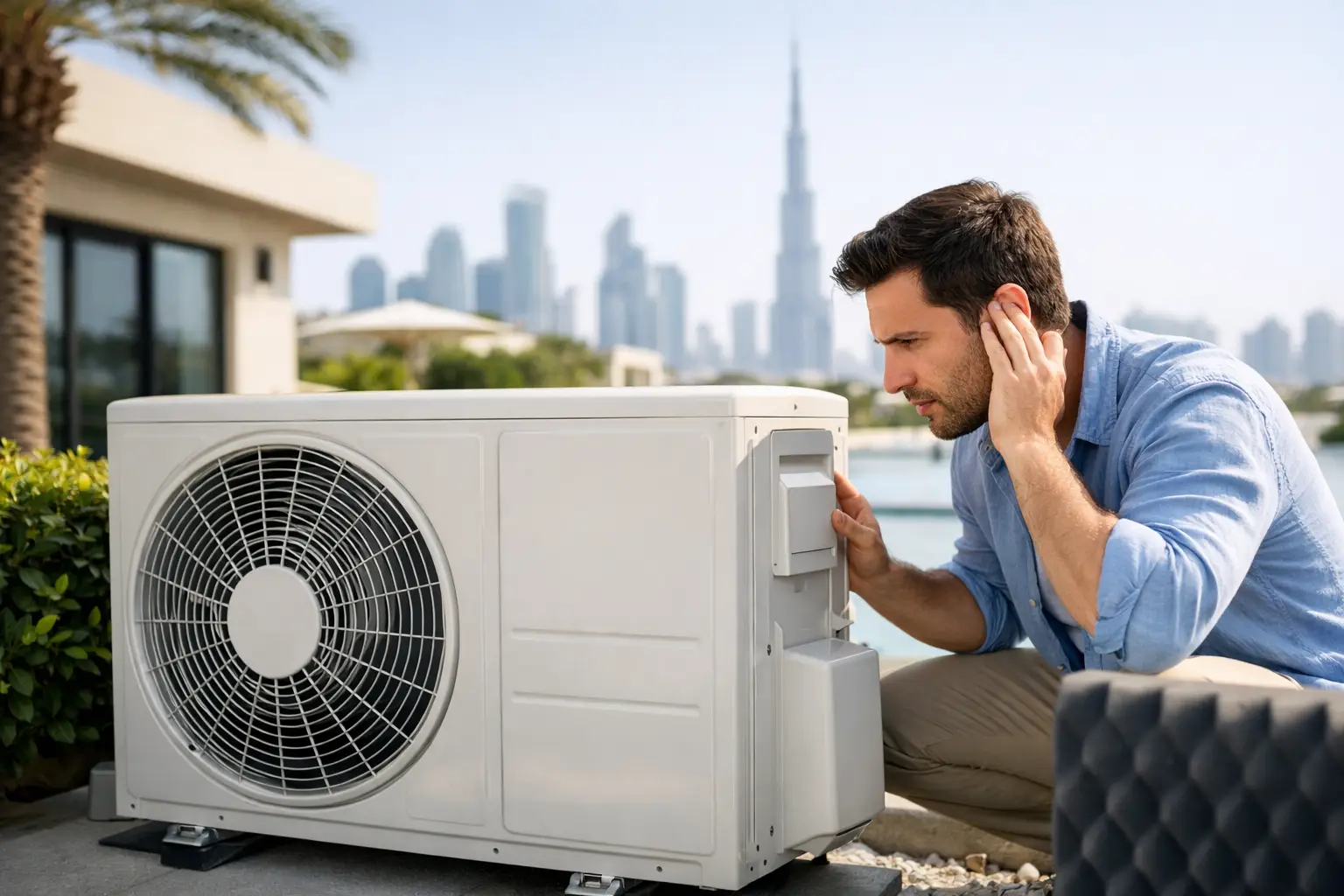
A loud AC can make a villa bedroom hard to sleep in, interrupt family time, and raise a fair question: is it only annoying, or is something starting to fail? Knowing how to reduce AC noise begins with identifying where the sound comes from and what it sounds like. Some causes are simple, such as a loose vent cover or dirty filter. Others need prompt attention before a minor vibration becomes a larger repair.
Dubai AC systems work hard for much of the year. Dust, long running hours, heat, and wear on moving parts all contribute to noise over time. The goal is not to make every system completely silent. A gentle airflow sound and a brief click when the unit starts are normal. Persistent rattling, banging, squealing, or unusually loud humming are not.
Start by locating the AC noise
Before trying to fix anything, switch the AC on and listen from a few locations. Is the sound coming from the indoor unit, an air vent, the outdoor condenser, or inside a wall or ceiling? This narrows down the likely cause and helps a technician assess the problem more quickly.
An indoor unit that makes a light rushing sound may simply be moving air through the fan. If the airflow suddenly becomes louder than usual, restricted airflow is often the reason. A dirty filter, blocked return grille, or closed vents can force the system to work harder and create more fan noise.
Noise from a vent can also travel through ductwork, making it seem as if the issue is in another room. In larger villas, this is common. One loose grille, damaged duct connection, or poorly supported section of duct can produce a rattle that is heard across a bedroom or hallway.
Outdoor units naturally make more noise than indoor units because they contain the compressor and condenser fan. But a condenser that shakes, clatters, or sounds noticeably harsher than before should be inspected. Do not assume the outdoor location makes the noise harmless.
How to reduce AC noise safely at home
A few checks are reasonable for homeowners, provided there is no electrical smell, water around electrical components, or severe mechanical noise. Turn the thermostat off before touching removable parts, and never open sealed panels or attempt electrical repairs.
First, check the air filter. A clogged filter restricts air movement, which can make the fan louder and reduce cooling performance. In dusty Dubai conditions, filters may need cleaning or replacement more frequently than residents expect. Use the filter type recommended for your unit and make sure it is fitted in the correct direction.
Next, look at visible vent covers and return grilles. Tighten accessible screws if a cover is vibrating, and make sure furniture, curtains, or storage items are not blocking the airflow. Closed or obstructed vents can increase air pressure and create a whistling or rushing sound. If a vent is dirty, clean the cover carefully rather than pushing debris into the duct.
For an outdoor condenser, clear leaves, loose packaging, garden items, and other objects from around the unit. Keep a clear space around it so air can circulate. Check only what is visible from the outside. If the cabinet is vibrating on its base, avoid wedging random materials under it. The unit may need proper leveling, anti-vibration supports, or a check of the mounting hardware.
It also helps to check whether the noise happens only at certain times. For example, a rattle that starts when the fan speed increases points to a different issue than a buzzing sound that happens the moment cooling begins. A short video with sound can be useful when arranging a service visit.
What common AC sounds usually mean
The character of the sound matters. While only an inspection can confirm the cause, these patterns provide a practical starting point.
Rattling or vibrating
Rattling often comes from loose screws, a vent cover, a fan housing, ductwork, or outdoor-unit panels. It may be a relatively straightforward adjustment, but it can also indicate a fan component that has worked loose. If rattling grows louder or is accompanied by weak cooling, turn the system off and arrange an inspection.
Banging or clanking
A bang, clank, or repeated knocking is more concerning. It can be caused by a loose or damaged fan blade, a compressor issue, or a component shifting when the system starts. Continued operation can cause additional damage, particularly if a moving part is striking the cabinet. Switch the AC off if the sound is strong, repeated, or new.
Squealing or screeching
High-pitched squealing may indicate a worn motor bearing, fan issue, or, in some systems, a belt problem. This is not a noise to ignore in the hope that it settles down. A failing motor or fan can eventually stop altogether, often when the AC is needed most.
Hissing or bubbling
A soft brief hiss can sometimes be normal as refrigerant pressure changes. Persistent hissing, bubbling, or a sound that occurs alongside poor cooling may point to a refrigerant leak or another sealed-system problem. Refrigerant work should always be handled by a qualified AC technician. It is not a DIY repair.
Buzzing or electrical humming
A mild hum during operation is expected. A loud buzz, especially if paired with a burning smell, tripped breaker, intermittent operation, or warm electrical panels, needs urgent attention. Turn the AC off at the thermostat and avoid resetting breakers repeatedly. Electrical faults can worsen quickly.
Why ACs become louder in Dubai homes
Dubai's climate places sustained demand on cooling systems. When an AC runs for long periods, motors, fans, and compressors experience more wear than equipment used only seasonally. Dust is another major factor. It builds up on filters, coils, and fan components, affecting airflow and balance.
Villa layouts can add another layer. Long duct runs, multiple zones, ceiling voids, and several indoor units create more places for vibration or airflow noise to develop. A room that has recently been renovated may also have a shifted grille, restricted return path, or insulation issue around ductwork.
Poor installation or aging supports can make the problem more noticeable. If an outdoor unit is mounted on brackets, the brackets and fixings need to remain secure. If it sits on a roof or slab, an uneven base can transfer vibration into the structure. The right fix depends on the equipment and installation, not simply on adding padding wherever the sound is heard.
When to book an AC technician
Book a professional inspection if the noise is new, getting worse, or affecting cooling. You should also arrange help when you hear banging, screeching, persistent hissing, or loud buzzing, or when AC noise comes with water leakage, bad odors, weak airflow, frequent cycling, or a rising electricity bill.
A proper visit should look beyond the sound itself. The technician may check filters and airflow, fan balance, motor condition, electrical connections, drainage, ductwork, mounting points, and the outdoor unit. This matters because a noisy AC can be a symptom rather than the main fault.
For households that have recurring AC concerns, planned maintenance can be more practical than waiting for a breakdown. Regular cleaning and inspection help identify loose parts, airflow restrictions, drainage problems, and worn components before they become urgent. Homes Done Right can assess unusual AC noise, explain the likely cause clearly, and recommend the appropriate repair or maintenance work.
Prevent noise before it starts
The quietest AC is usually one that is kept clean, properly supported, and serviced before peak summer demand. Clean or replace filters on schedule, keep vents clear, and do not ignore a small change in sound just because the unit is still cooling. A minor rattle is easier to investigate than a failed fan motor on a hot afternoon.
If a sound is making you unsure, trust the change you have noticed. Your AC does not need to be silent, but it should sound steady and familiar. Acting while the issue is still small can protect your comfort, your equipment, and a much-needed quiet night at home.