

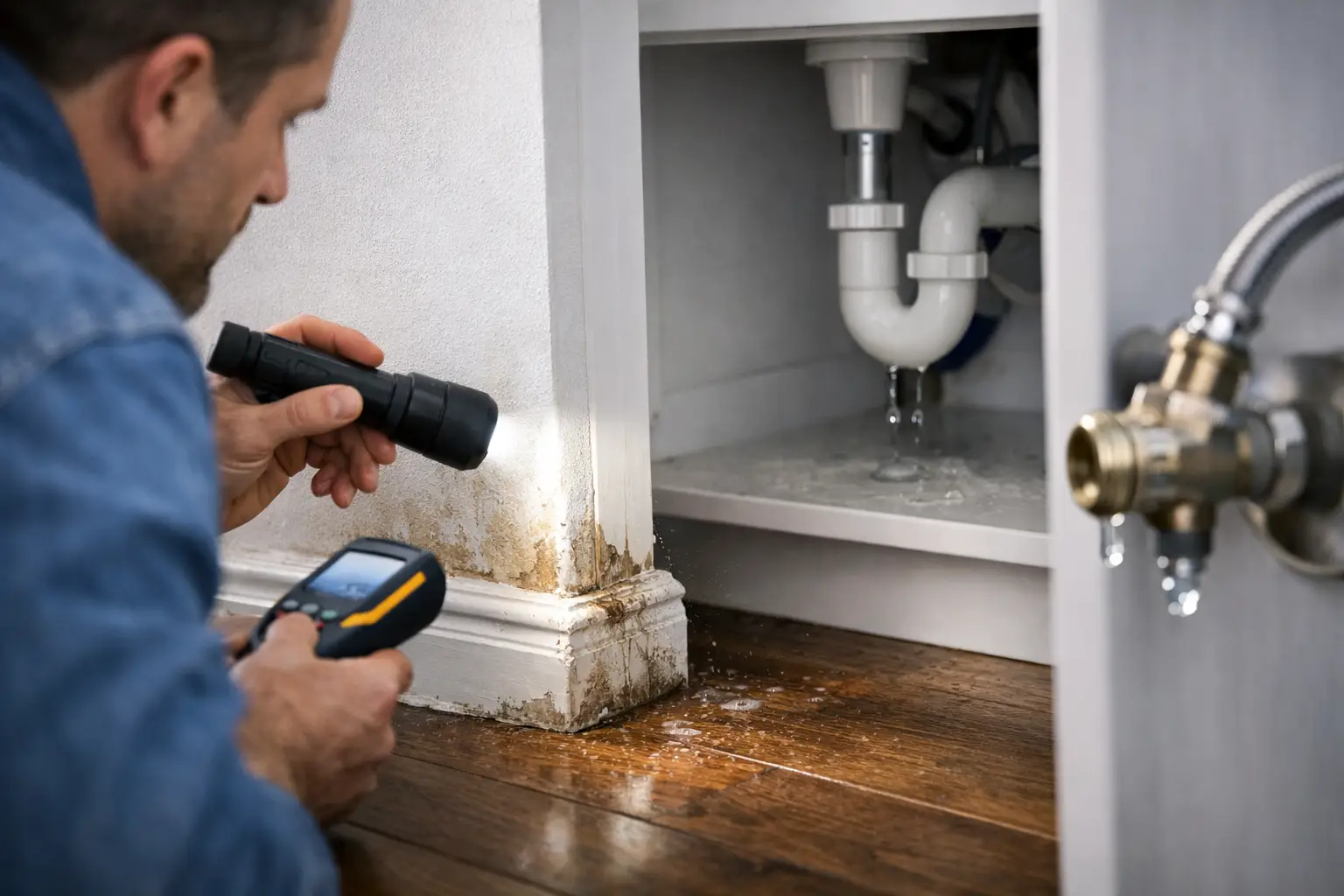
A hidden water leak rarely begins with a dramatic burst pipe. More often, it starts as a slightly higher utility bill, a musty smell in a guest bathroom, or a patch of paint that never seems to dry properly. Knowing how to find hidden leaks early can protect your villa from mold, damaged finishes, wasted water, and a repair that becomes far more disruptive than it needed to be.
For Dubai homeowners, the signs can be easy to overlook. Air conditioning runs for much of the year, bathrooms see frequent use, and outdoor irrigation systems can mask a leak until water damage or a major bill makes the problem obvious. A few practical checks can help you identify where the issue may be coming from before arranging a professional inspection.
Start With the Signs You Can See and Smell
Look beyond obvious puddles. Water can travel along pipes, behind walls, under floor tiles, and through ceilings before it appears in the room where you notice it. The visible mark is not always the location of the leak.
Check walls and ceilings for yellow or brown staining, peeling paint, bubbling plaster, soft patches, or a darker area that grows after showers or after the AC has been running. In bathrooms, pay close attention to the wall shared with the shower, bathtub, or concealed toilet tank. In villas, inspect ceilings below upstairs bathrooms and around water tanks or utility areas.
A persistent damp or earthy smell also deserves attention, particularly inside cabinets under sinks, behind toilets, in laundry rooms, and in rooms that are usually closed. Do not assume every musty smell is caused by humidity. Dubai’s humidity can make a damp area feel worse, but moisture still needs a source.
Tiles may offer another clue. Loose tiles, cracked grout, or grout that stays dark long after use can allow water below the surface. This does not automatically mean there is a pipe leak. Failed waterproofing around a shower is also common, and the repair approach is different. A proper assessment should distinguish between a plumbing leak, a drainage issue, and water entering through damaged sealant or grout.
Use Your Water Meter to Check for a Hidden Leak
Your water meter is one of the simplest tools for finding a continuous leak. It will not tell you the exact location, but it can confirm whether water is being used when it should not be.
First, make sure no one in the home is using water. Turn off taps, washing machines, dishwashers, irrigation, pool top-up systems, and any appliance connected to water. Avoid checking immediately after an irrigation cycle, as some systems refill or reset automatically.
Take a clear photo of the meter reading, including the small flow indicator if your meter has one. Then leave all water off for at least 30 minutes. For a more reliable result, check it overnight when the household is asleep and irrigation is disabled. If the reading changes or the flow indicator moves, water is passing through the system.
This result needs context. A moving meter can point to a leak in an internal pipe, an underground line, a toilet cistern, an irrigation pipe, or a faulty valve. It can also be caused by equipment you forgot was operating. Before assuming the worst, repeat the test after checking all water-using systems.
Check Toilets, Taps, and Appliances First
Small leaks from accessible fixtures are much easier and less expensive to resolve than a leak behind a wall or below a floor. Check these areas before opening tiles or arranging invasive investigation.
A toilet can leak silently from the tank into the bowl. Put a few drops of food coloring into the toilet tank and wait 15 to 20 minutes without flushing. If color appears in the bowl, the flush valve is allowing water through. This type of leak may not create a puddle, but it can waste a surprising amount of water.
Look under kitchen and bathroom sinks with a dry tissue or paper towel. Run hot and cold water separately, then inspect the drain connections, shutoff valves, flexible hoses, and the cabinet base. A slow leak often leaves swelling, staining, or a white mineral residue before there is visible standing water.
Inspect washing machine hoses, dishwasher connections, water heater valves, and the area around any water filter. In a villa, also check external taps, garden hose connections, and irrigation control boxes. If an outdoor area is unusually green, muddy, or soft in one place, an underground irrigation leak is possible. However, landscaping patterns, overwatering, and poor drainage can produce similar signs.
Separate AC Condensation From a Plumbing Leak
In Dubai homes, AC condensation is a frequent source of confusion. A blocked condensate drain can lead to dripping, ceiling marks, water around an indoor unit, or moisture near an AC duct. It may look like a plumbing leak, but it requires a different repair.
If staining or dripping appears mainly when the AC is operating, switch the system off briefly and see whether the moisture stops. Check whether the issue is close to an indoor fan coil unit, AC drain line, or ceiling access panel. A musty AC smell, weak cooling, or water dripping from a vent can support the case for a condensate drainage problem.
Do not leave it untreated just because it is not a pressurized pipe leak. Condensate water can still damage ceilings, encourage mold growth, and affect nearby electrical fittings. A technician should inspect the drain line, tray, insulation, and unit operation rather than simply repainting the stain.
Test One Area at a Time
When a meter test suggests water is leaking, isolating areas can narrow down the source. Turn off the water supply to a toilet, bathroom, or external irrigation zone if separate valves are available, then repeat the meter check. If meter movement stops after one area is isolated, the issue is likely within that section.
This approach is useful, but do not force old valves or attempt to disconnect concealed plumbing. In many homes, shutoff valves have not been moved for years and may fail when handled. If you are unsure which valve controls what, it is safer to have a plumber test the system.
Keep a simple record of what you find: where the stain is located, when it gets worse, whether the meter moved, and whether the problem changes after showers, AC use, or irrigation. Photos taken several days apart can show whether a damp patch is spreading. This information helps the technician arrive prepared and reduces guesswork during the visit.
Know When You Need Professional Leak Detection
Some hidden leaks cannot be found reliably by sight alone. If your meter keeps moving, a wall or ceiling stain is spreading, paint is bubbling, or you hear water running when all fixtures are off, arrange a professional inspection promptly.
A qualified team can use pressure testing, moisture readings, thermal imaging, and acoustic leak detection where appropriate. The best method depends on the pipe material, whether the line is inside a wall or below a slab, and whether the suspected problem involves clean water, drainage, waterproofing, irrigation, or AC condensate.
There is a trade-off between fast repair and accurate diagnosis. Breaking tiles immediately may reveal the issue, but it can also create unnecessary restoration work if the leak is elsewhere. Non-invasive testing is often the sensible first step, especially in finished bathrooms, kitchens, and living spaces. Once the source is confirmed, the repair can be planned with a clearer idea of what needs to be opened, repaired, tested, and restored.
For homeowners who want one team to assess the problem, explain the findings, and coordinate the repair, Homes Done Right can help with plumbing, AC drainage, tiling, and related home maintenance needs across Dubai.
Reduce the Chances of Another Hidden Leak
After a repair, ask what caused the issue. A failed flexible hose, worn toilet valve, blocked AC drain, deteriorated sealant, and damaged waterproofing do not have the same prevention plan. Replacing a single fitting may solve an isolated fault, while repeated bathroom leaks may call for a closer look at grout, silicone, drainage slope, and waterproofing behind the tiles.
Regular checks are especially worthwhile before extended travel, after a home has been vacant, and when moving into a newly purchased or rented villa. Look inside sink cabinets, check ceilings below bathrooms, confirm that irrigation is not running excessively, and address slow drains before they become overflows.
A hidden leak is easier to manage when it is still a clue rather than a crisis. Trust the small changes in your home, document what you see, and get the right diagnosis before water has time to spread.