

A kitchen sink that fills while you are washing dishes is more than an inconvenience. In a busy villa household, it can stop meal preparation, leave odors around the kitchen, and turn a small cleanup job into a water-damage concern. Knowing how to clear kitchen drain blockages safely can help with simple clogs, but the method matters. The wrong chemical, too much force, or repeated DIY attempts can damage pipes or push the problem farther down the line.
Most kitchen drain clogs build gradually. Grease cools inside the pipe, food particles stick to it, and soap residue adds another layer. In Dubai homes, mineral deposits can also contribute over time. The result is usually slow drainage before the sink stops draining altogether.
Start by checking where the blockage is
Before reaching for a drain cleaner, check whether the issue is limited to the kitchen sink. If the bathroom sinks, floor drain, or washing machine drain are also backing up, the blockage may be in a larger shared pipe or the main drainage line. That is not usually a kitchen-sink DIY job.
If only one side of a double-bowl sink is slow, the blockage may be close to that bowl or in the connecting pipe. If both bowls fill up together, the blockage is more likely below the point where they join. A gurgling sound, foul smell, or water coming up through the other bowl are useful clues that the drain needs closer attention.
Also look under the sink before doing anything else. If there is active leaking around pipe joints, cabinet swelling, or standing water, place a bucket underneath and avoid using the sink until the source is assessed.
How to clear kitchen drain clogs step by step
For a minor clog, begin with the least aggressive option. Remove any visible food scraps from the sink strainer and put them in the trash. Do not push them into the drain. If your sink has a garbage disposal, switch off its power at the wall or breaker before checking inside. Never put your hand into a disposal unit.
Flush with hot water and dish soap
If the drain is slow rather than fully blocked, add a good squeeze of grease-cutting dish soap to the drain, then run hot tap water for several minutes. Hot water can soften fresh grease buildup and help move it through the pipe.
Avoid pouring a full kettle of boiling water into a sink without knowing the pipe material and condition. Very high heat can be hard on some plastic pipe fittings and seals, especially in an older installation. Hot tap water is the safer first step.
Use a sink plunger correctly
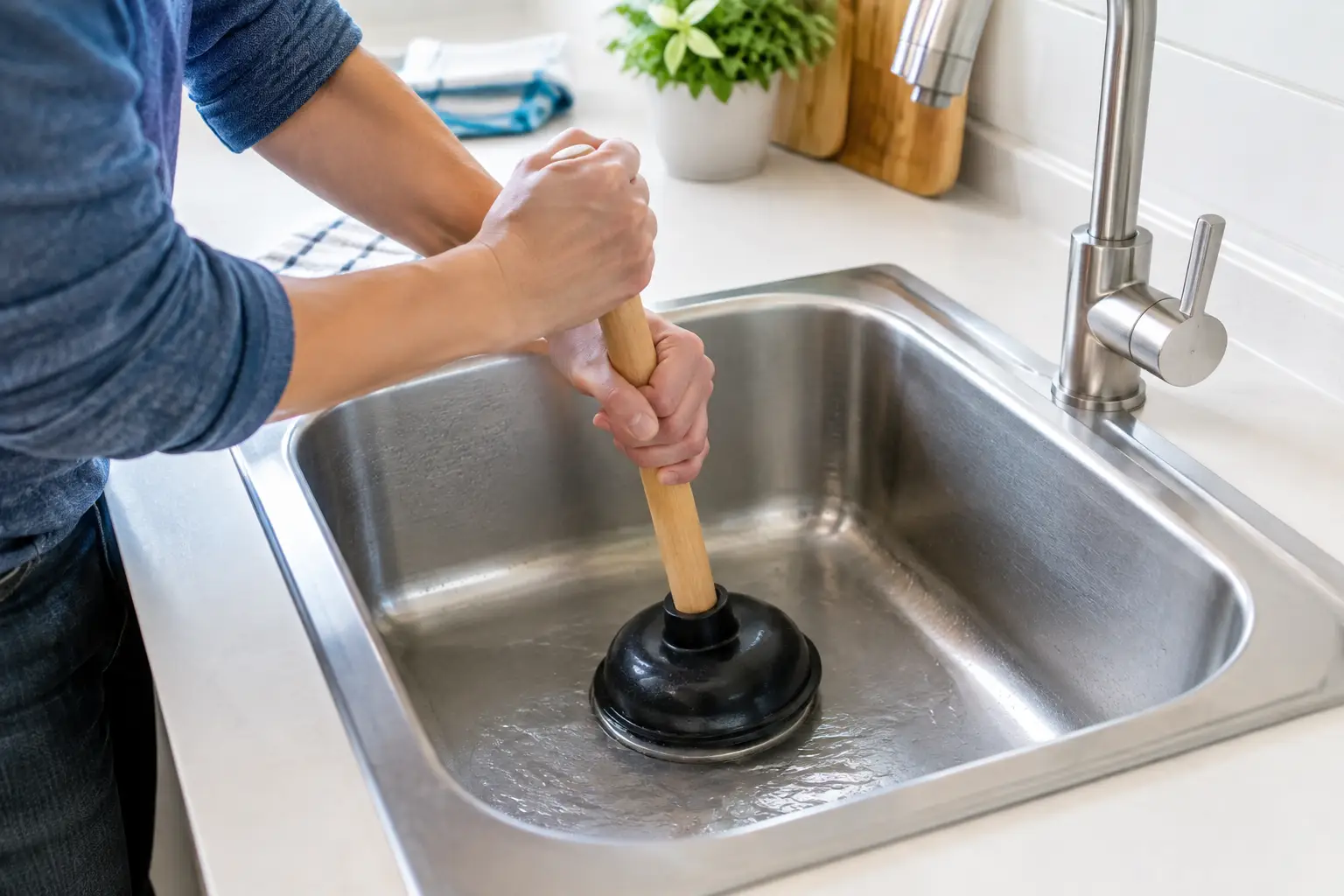
A cup plunger can often clear a blockage near the sink opening. For a double-bowl sink, plug the second drain opening tightly with a wet cloth or stopper. This creates pressure in the blocked side instead of allowing air to escape through the other bowl.
Add enough water to cover the plunger cup, place it firmly over the drain, and make 10 to 15 steady plunges. Keep the seal tight. Then lift the plunger and test the drain with water. You may need to repeat this two or three times, but stop if water starts leaking beneath the sink.
Do not use a plunger after pouring chemical drain cleaner into the sink. Splashes from these products can cause skin and eye injuries.
Clean the P-trap if you are comfortable doing so
The curved section of pipe beneath the sink, called the P-trap, is designed to hold water and prevent sewer odors from entering the home. It is also a common place for food debris and grease to collect.
Place a bucket and old towel below the trap, then carefully loosen the slip nuts by hand if they are accessible. Let the water drain into the bucket and remove any debris from the trap. Rinse it, check that the washers are sitting correctly, and reinstall it without overtightening the fittings.
This works best for an accessible, simple under-sink setup. If the pipes are glued, corroded, difficult to reach, or connected to a dishwasher drain line, leave the work to a plumbing technician. A small mistake can create a hidden leak inside the cabinet.
Try a drain snake for deeper clogs
A hand-crank drain snake may help if plunging and cleaning the trap do not work. Feed it gently into the wall pipe after removing the P-trap. Turn the handle slowly as you advance it, rather than forcing it. When you feel resistance, work the cable back and forth to break up or catch the blockage.
Pull the cable out slowly, clean it into a bucket, reassemble the trap, and test the drain. If the snake will not move forward easily, do not keep pushing. It may be catching on a fitting, or the obstruction may be too far down the line for a basic hand tool.
What not to put down a kitchen drain
Prevention is usually easier than clearing a stubborn blockage. Even a garbage disposal is not designed to handle every type of kitchen waste. Grease, cooking oil, coffee grounds, rice, pasta, flour, eggshells, vegetable peels, and fibrous foods can all create problems in different ways.
Oil is particularly common. It may look harmless while warm, but it cools and sticks to the inside of the pipe. Pour cooled oil into a sealed container and dispose of it with household waste instead. Wipe greasy pans with a paper towel before washing them.
Baking soda and vinegar are often suggested as a natural drain treatment. They can freshen a mildly smelly drain and may shift very light residue, but they are unlikely to remove a dense grease clog or a solid food blockage. Think of them as a maintenance step, not a reliable fix for standing water.
Strong chemical drain cleaners are also a poor first choice. They can damage pipework, harm seals, produce fumes, and create a hazard for anyone who later opens the trap or works on the drain. Never mix chemicals, including bleach and drain cleaner.
When a kitchen drain needs a plumber
A professional assessment is the sensible next step when the sink remains blocked after basic measures, the clog returns soon after clearing, or water backs up into another fixture. Repeated blockages usually mean the issue is deeper than the trap. Grease buildup farther along the pipe, a poorly sloped drain line, a damaged pipe, or a blockage in the main line may be involved.
Call for help sooner if you notice sewage smells, dirty water coming back into the sink, leaks in the cabinet, or slow drainage in several rooms. These are signs that the problem may affect more than one local pipe.
For villa households, it is also worth checking whether the issue started after a party, heavy cooking, a renovation, or landscaping work near external drainage areas. The timing can help a technician diagnose the cause faster and avoid unnecessary work.
Homes Done Right can assess kitchen drainage problems, explain what is causing the blockage, and recommend the appropriate repair rather than relying on a temporary treatment.
Keep the drain clear after the repair
Once the water is flowing normally, use the sink strainer every day and empty it before food scraps build up. Run hot water with dish soap after washing greasy cookware, and avoid treating the drain as a disposal route for cooking waste.
If your kitchen drain blocks more than once or twice a year, do not simply keep repeating the same home remedy. Regular recurrence is useful information: it often points to a developing pipe or drainage issue that deserves proper attention. A clear drain should stay clear, giving your kitchen back to the routines that matter.