

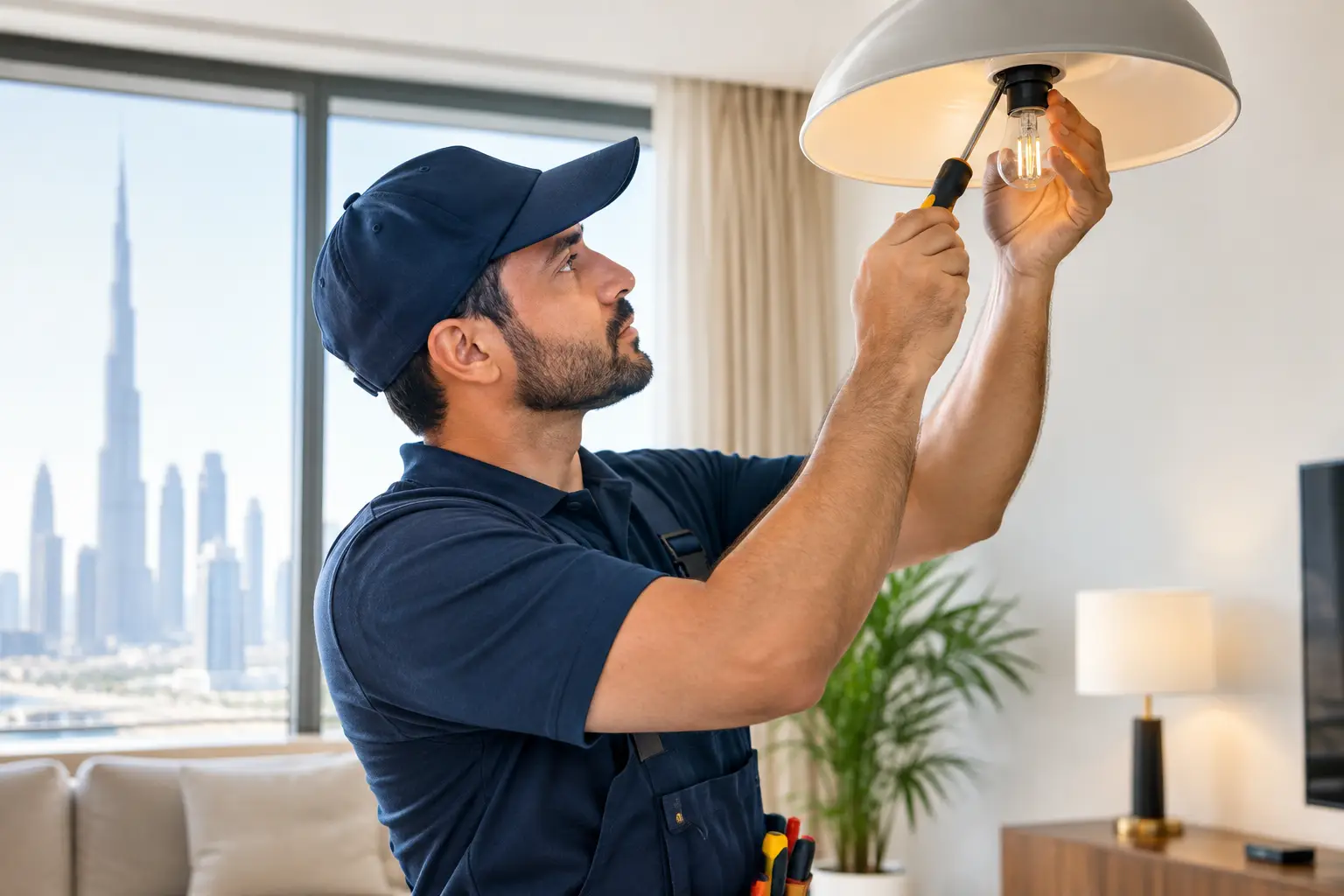
A light that flickers once when you switch it on may be a simple bulb issue. A light that dims across several rooms, flashes when the AC starts, or comes with a warm switch plate needs more attention. Flickering lights repair starts with identifying the pattern safely, rather than repeatedly changing bulbs and hoping the problem disappears.
For villa households in Dubai, the cause can range from a loose LED bulb to a connection inside a fitting, a failing dimmer, or an electrical load issue. The right response depends on what is flickering, when it happens, and whether other electrical symptoms are present.
When flickering lights are an electrical safety concern
Switch off the affected light circuit at the distribution board and arrange an electrician promptly if flickering is accompanied by a burning smell, crackling sound, scorch marks, heat around a switch or outlet, or a circuit breaker that trips repeatedly. Do not remove a switch plate, touch exposed wiring, or keep resetting a breaker that will not stay on.
You should also treat sudden widespread flickering as urgent. If lights in different rooms brighten and dim noticeably, especially alongside appliances behaving unusually, there may be a loose neutral connection or another supply-related fault. That is not a DIY repair and can damage appliances as well as create a fire risk.
A single bulb flickering occasionally is usually less urgent, but it still deserves checking. A small fault at a fitting can become more persistent over time, particularly in frequently used areas such as kitchens, hallways, bathrooms, and outdoor spaces.
Common causes of flickering lights in Dubai homes
The most likely cause is often the simplest one: an LED bulb that is not seated correctly, is nearing the end of its life, or is not compatible with the fixture. Turn off the switch, allow the bulb to cool, and check that it is fitted securely. If the bulb is old or visibly damaged, replace it with a suitable quality LED bulb of the correct fitting and wattage.
If a new bulb still flickers in the same fixture, the issue may be in the fitting itself. Loose internal terminals, corrosion, heat damage, and worn lamp holders can all interrupt the electrical connection. Decorative fixtures with multiple lamps can also make diagnosis confusing, since one poor connection may affect more than one light.
Dimmer switches and LED compatibility
Many homes use dimmers for living rooms, bedrooms, or feature lighting. Not every LED bulb is dimmable, and even dimmable LEDs may not work properly with an older dimmer switch. Symptoms include flickering at low brightness, buzzing, a light that will not fully turn off, or lamps that suddenly jump in brightness.
Replacing a bulb may help, but it is not always the full answer. The dimmer may need to be matched to LED lighting, or the fixture may require a compatible driver. An electrician can check the system and recommend a practical replacement rather than guessing with several different bulbs.
Loose switches, wiring, and connections
A flicker when someone walks past a wall switch, opens a door, or touches a fitting can point to a loose connection. This may be at the switch, ceiling rose, junction point, or fixture. Since concealed wiring and electrical connections should only be handled by a qualified technician, avoid taking covers off to investigate.
In villas, renovations and previous repairs can sometimes leave behind connections that were not properly secured or components that have aged unevenly. A professional inspection is especially useful if the fault began after new light fittings, smart switches, curtains, shelving, or other work near walls and ceilings was installed.
Circuit load and large appliances
Lights may briefly dim when an AC compressor, water pump, washing machine, or other high-load appliance starts. A very slight, occasional dip can happen in some homes, but repeated or strong flickering should be assessed. It may indicate that the circuit is overloaded, connections are loose, or the electrical system needs a closer review.
This matters in larger properties where additional appliances, garden lighting, pool equipment, and extensions may have been added over the years. Electrical capacity should match the way the home is actually being used. Adding more fixtures to an already busy circuit is rarely the right long-term solution.
Outdoor and moisture-prone fixtures
Outdoor lights, garden lighting, bathroom fittings, and lights near balconies face different conditions from a dry bedroom fixture. Moisture, dust, insects, and heat can affect fittings and drivers. A flickering external light after rain, washing the area, or irrigation may be a sign that water has entered the fixture or an enclosure.
Do not ignore this simply because the light still works. Switch it off if it is safe to do so and have the fixture inspected. The repair could be as straightforward as replacing a weather-damaged fitting, but the surrounding wiring and protection also need checking.
What you can check before booking flickering lights repair
There are a few safe observations that make an electrician's visit more efficient. Notice whether the flicker affects one bulb, one fixture, one room, or the whole home. Check whether it happens only when a particular appliance runs, when a dimmer is adjusted, or at a certain time of day.
You can also try a known-working, compatible bulb in the same fixture after turning the power off and letting the lamp cool. If the replacement works normally, the original bulb was likely the problem. If it flickers too, stop there and arrange an inspection rather than trying to repair the fitting yourself.
It helps to tell the technician if breakers have tripped, whether recent electrical work was completed, and if there has been water leakage nearby. A short video of the flickering can be useful when the problem is intermittent. These details help narrow down the cause before work begins.
What an electrician should assess
A proper flickering lights repair visit is more than changing a bulb. The electrician should identify the affected circuit, inspect the fixture and switch condition, test connections where appropriate, and check whether the bulb, driver, dimmer, or circuit is the likely cause.
For recurring or widespread flickering, the inspection may extend to the distribution board and circuit loading. The goal is to correct the fault at its source, whether that means replacing a damaged fitting, securing a connection, changing an incompatible dimmer, replacing an LED driver, or separating overloaded circuits.
The repair approach depends on the finding. A loose bulb holder has a different solution and cost from a concealed wiring fault. Clear explanation matters here: you should know what caused the issue, what work is recommended, and whether there are related items worth monitoring.
Avoid temporary fixes that hide the problem
Do not keep using a flickering light by turning the dimmer to a different setting or repeatedly tightening a bulb if the fitting feels loose. Avoid using higher-wattage bulbs to make a weak light brighter, and do not replace a tripping breaker with a larger one. These shortcuts can increase heat and mask a fault that needs repair.
It is also worth avoiding a patchwork approach when multiple lights are affected. Replacing several bulbs may seem cheaper in the moment, but it will not solve a poor connection or overloaded circuit. A targeted diagnosis often prevents repeat call-outs and protects more expensive electrical equipment in the home.
A practical way to get the issue resolved
When booking an electrical visit, describe where the flickering occurs and whether it affects other lights or appliances. Homes Done Right can arrange a qualified technician to inspect the issue, explain the likely cause, and carry out the appropriate repair with clear communication around the work needed.
For homes with recurring maintenance needs, an annual maintenance plan can also make it easier to address small electrical concerns before they turn into disruptive faults. The sensible next step is simple: if the flickering is persistent, spreading, or paired with heat, noise, or tripping, switch off the affected circuit and have it checked rather than waiting for it to worsen.