

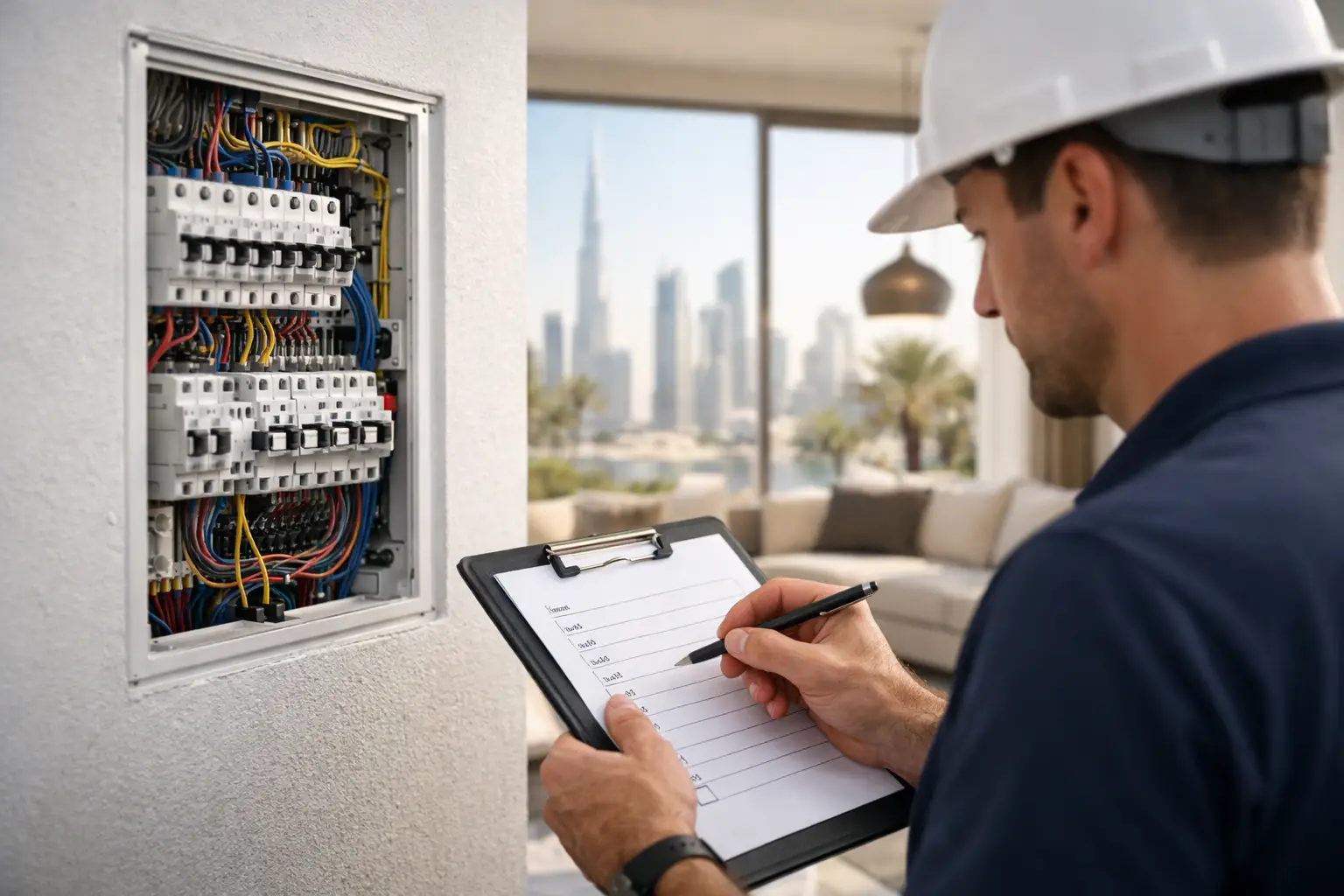
A light that flickers only when the AC starts, a breaker that trips after you plug in the kettle, or an outlet that feels warm are not small annoyances to ignore. An electrical inspection checklist helps Dubai homeowners notice early warning signs, separate safe visual checks from work that needs a professional, and avoid turning a minor fault into a sudden loss of power or a safety risk.
For villa households, the challenge is often scale. More rooms, outdoor lighting, garden pumps, water heaters, AC equipment, appliances, and extension cords can mean more possible failure points. You do not need to diagnose the wiring yourself. You do need to know what deserves prompt attention.
Electrical Inspection Checklist: What You Can Check Safely
Start with a walk-through of the home when there is enough light to see sockets, switches, and visible cables clearly. Do not remove outlet covers, open the distribution board, or touch exposed wiring. The goal is to observe, not test live electrical components.
Use this electrical inspection checklist for the areas residents can assess safely:
- Check outlets and switches for cracks, looseness, discoloration, buzzing, heat, or a burning smell. A plug should fit firmly and a switch should not spark, stick, or make unusual noises.
- Look at visible cords for fraying, crushed sections, taped repairs, or damage near plugs. Replace damaged leads rather than trying to repair them with tape.
- Notice whether lights dim, flicker, or pulse when larger equipment starts. This can happen with an AC unit, water pump, oven, or other high-load appliance and may point to an overloaded circuit or connection issue.
- Check whether breakers trip repeatedly. Resetting a breaker once after an obvious overload can be reasonable. Repeated tripping is a signal to stop using the affected circuit and arrange an inspection.
- Review power strips and extension cords. They should not be overloaded, linked together, run under rugs, or used as a long-term solution for fixed appliances.
- Inspect outdoor outlets, lights, and cables for cracked covers, water exposure, corrosion, or loose fittings. Dubai heat, irrigation, pool areas, and dust all add wear to exterior electrical equipment.
Write down where and when a problem happens. For example, note whether the kitchen breaker trips only when the microwave and kettle run together, or whether a bedroom light flickers at a certain time of day. This gives the technician a much clearer starting point.
Start at the Distribution Board, but Do Not Open It
Your distribution board, sometimes called a breaker panel, is where the home’s circuits are protected and controlled. You can safely check the exterior condition and look for labels, but internal inspection belongs to a qualified electrician.
The panel door should close properly, remain accessible, and show no signs of heat damage, rust, moisture, or a burning smell. Avoid storing boxes, cleaning products, or household items in front of it. In an urgent situation, you need to reach the main switch without delay.
Clear circuit labels are more useful than many homeowners realize. Labels such as “upstairs sockets” or “kitchen lights” are better than unlabeled breakers, but more specific labels make future repairs and emergencies easier to manage. If a breaker trips, do not keep switching it back on in the hope that it will hold. A breaker is doing its job when it interrupts a potentially unsafe fault or overload.
If you see scorch marks, hear crackling, smell burning, or find the board hot to the touch, switch off power only if it is safe to do so and contact an electrician urgently. Keep family members away from the area.
Check High-Use Areas More Often
Some rooms place more demand on electrical circuits than others. A yearly whole-home review is sensible for most households, but kitchens, bathrooms, utility rooms, and outdoor areas benefit from more frequent checks.
Kitchen and Utility Room
Kitchens often run several high-load appliances at once. Kettles, microwaves, dishwashers, refrigerators, ovens, water dispensers, and coffee machines can quickly overload an outlet or circuit if they are poorly distributed.
Watch for adapters packed into one socket, plugs that become hot, and appliances that repeatedly cause a breaker to trip. Major appliances should not depend on lightweight extension cords. In a utility room, inspect the area around washing machines and dryers for water leaks near electrical outlets or connections. Water and electricity should always be treated as an urgent combination.
Bathrooms and Wet Areas
Bathrooms need particular care because moisture can enter fittings and outlets over time. Check that light fixtures, exhaust fans, and outlet covers are secure and show no water staining or corrosion. Never use an appliance near a basin, bathtub, or wet floor if the cable or plug is damaged.
If a bathroom light flickers after showering, a fan becomes noisy, or an outlet shows any sign of moisture, stop using the affected fitting until it has been checked. The fault may be simple, but it is not one to guess at.
Outdoor, Garden, and Pool Areas
Villa gardens frequently have landscape lights, irrigation controls, gate motors, pumps, and exterior outlets. These systems are exposed to sun, dust, rain, cleaning, and irrigation water, so a fitting that looked fine six months ago may no longer be properly sealed.
Look for broken weather covers, low-hanging cables, loose garden lights, and equipment that trips power after watering or rain. Pool and water-feature equipment should always be inspected by a professional when there is a fault. Do not handle pumps, lights, or connections while standing on wet ground.
Pay Attention to Dubai-Specific Electrical Stress
Dubai’s long hot season puts electrical systems under sustained pressure. AC units run for extended periods, and homes may use multiple cooling systems, pumps, and appliances at the same time. A circuit that copes during mild weather may show weakness during peak summer demand.
Dust is another practical issue. It can build up around vents, outdoor fittings, and equipment enclosures. Dust alone does not prove an electrical defect, but when combined with heat, poor ventilation, moisture, or aging components, it can contribute to problems.
Older villas and homes that have been renovated in stages also deserve a closer look. Added rooms, upgraded kitchens, garden structures, or extra AC equipment may have increased electrical demand beyond the original layout. This does not automatically mean the installation is unsafe. It does mean an electrician should assess capacity if breakers trip often or power feels unreliable under normal use.
Know When a Visual Check Is Not Enough
A homeowner checklist is useful for spotting symptoms. It cannot confirm whether circuit protection, earthing, cable sizing, internal connections, or load balance are correct. Those checks require appropriate tools and professional testing.
Arrange an electrical inspection promptly if you have recurring breaker trips, warm outlets or switches, frequent flickering, shocks or tingling when touching an appliance, burning odors, visible damage, water near electrical equipment, or sudden loss of power to part of the home. Call for urgent help when there is smoke, sparking, severe heat, or an exposed live wire. Keep clear of the area and do not attempt a repair.
It also makes sense to book an inspection before moving into a previously occupied villa, after a major renovation, after water damage, or before adding high-demand equipment. The right timing depends on the home’s age, its electrical load, and whether you have noticed warning signs. Preventive checks are especially worthwhile when a household relies heavily on AC, outdoor systems, and multiple appliances.
Make the Technician Visit More Useful
Before the appointment, list the symptoms, affected rooms, and appliances involved. Take a photo of any visible discoloration or damage from a safe distance, and note which breakers have tripped. If a problem happens at a particular time, such as when the AC starts in the afternoon, mention that too.
A dependable maintenance team should explain what they found in plain language, identify whether the issue is urgent, and clarify the recommended repair before work begins. Homes Done Right can help Dubai households assess electrical faults, carry out appropriate repairs, and plan preventive maintenance where recurring issues are becoming a concern.
Electrical problems rarely become more convenient with time. A quick, safe check today and a clear record of anything unusual can make it much easier to get the right help before a busy family day is interrupted by a preventable power issue.