

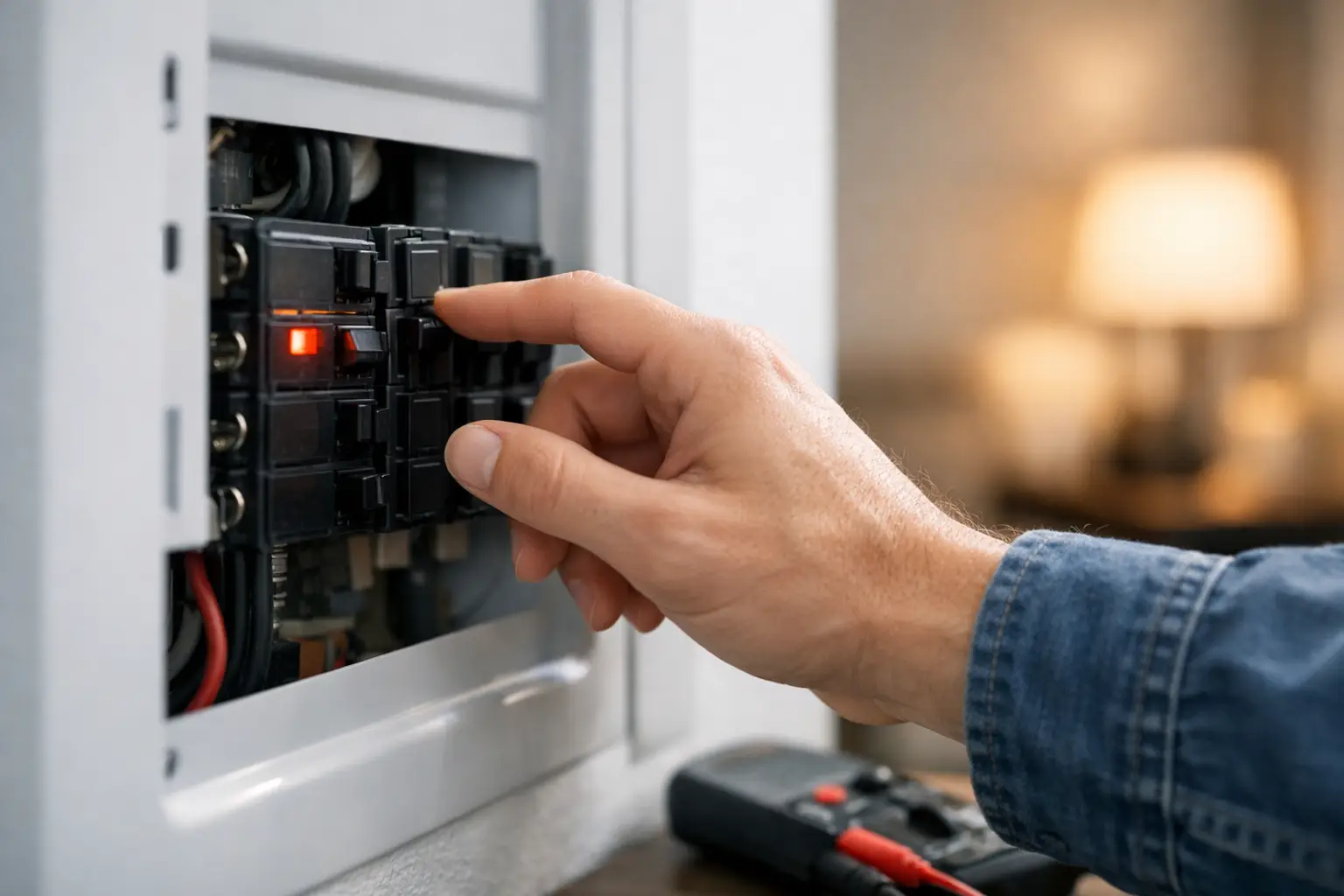
A circuit breaker keeps tripping when it detects a condition that could overheat wiring, damage an appliance, or create a shock risk. It can be frustrating when the lights go out halfway through dinner or the AC stops on a hot Dubai afternoon, but the breaker is doing the job it was designed to do. Resetting it may restore power temporarily. Finding out why it tripped is what keeps the problem from returning.
Why a Circuit Breaker Keeps Tripping
A breaker trips when too much current passes through a circuit or when it detects an electrical fault. In a villa, this may affect one room, an outdoor area, the kitchen, or a larger system such as an AC unit or water heater. The pattern matters: a trip that happens only when a specific appliance runs points to a different problem than a breaker that will not stay on at all.
The most common cause is an overloaded circuit. Every circuit has a safe capacity. If several high-demand appliances run from the same circuit, the combined load can exceed it. Kettles, air fryers, microwaves, washing machines, dryers, space heaters, and portable AC units can all draw significant power. Extension leads and multi-plug adapters make it easy to add more equipment than a circuit was intended to handle.
An overload often occurs after an appliance has been running for a while, rather than the instant it is switched on. The breaker may reset and stay on once some appliances are unplugged or turned off. That is useful information, but it does not mean the solution is to fit a larger breaker. A breaker must match the cable size and circuit design. Installing a larger one without assessing the wiring can remove the protection and create a fire risk.
A short circuit is more urgent. This happens when a live wire touches a neutral wire or another unintended conductive path. The breaker usually trips immediately when you switch it on, or as soon as a particular appliance or light is used. Damaged appliance cords, loose connections, worn sockets, pest damage, moisture, and faulty internal components can all cause short circuits.
Many Dubai homes also have residual-current protection, often called an RCD, RCCB, or RCBO. This device monitors for electricity leaking from the circuit, including through moisture or damaged insulation. It can trip even when the circuit is not overloaded. Outdoor sockets, garden lighting, bathrooms, kitchens, water heaters, and AC equipment are common places for this type of issue because water and electricity do not mix safely.
Common Causes in Dubai Villas
Dubai's climate places extra demands on residential electrical systems. AC units run for long periods, especially during summer, and a faulty compressor, capacitor, fan motor, or electrical connection can repeatedly trip its dedicated breaker. If power goes off only when a particular AC starts or after it has cooled for a short time, stop resetting the breaker and arrange an assessment.
Water heaters are another frequent source of faults. A failing heating element can leak current to earth, causing an RCD or RCBO to trip. You may notice that the breaker trips when hot water is used, after the heater has been switched on for a period, or when a timer activates it. Do not keep the heater operating if there is any smell of burning, discoloration around the switch, or an electric tingle from taps or fixtures.
Outdoor circuits deserve attention as well. Irrigation controls, pool equipment, landscape lights, exterior sockets, and gate motors are exposed to heat, dust, humidity, and occasional water ingress. A trip after rain, washing down an area, or irrigation starts is a strong clue that a weatherproof fitting, cable joint, or connected device needs inspection.
Older properties and homes that have had alterations can have another complication: circuits may not be labeled clearly, or extra sockets and lighting may have been added over time. A breaker labeled "kitchen" might also supply a utility room socket, outdoor lighting, or part of the staff accommodation. That makes professional testing more valuable than guessing based on the label alone.
What You Can Check Safely Before Calling an Electrician
You do not need to remove a panel cover or touch any wiring to gather useful information. Start by noting which breaker has tripped and what was running immediately before it happened. Was the dishwasher in a heating cycle? Did the AC compressor start? Did you plug in an appliance? Did the trip happen when garden irrigation came on?
Switch off and unplug appliances on the affected circuit where practical. Then reset the breaker once by moving it fully to the OFF position before returning it to ON. Some breakers look on even after tripping, so this full reset step matters. If it stays on, reconnect and use appliances one at a time. When the breaker trips again, the last appliance or area used may be connected to the fault.
Stop there if the breaker trips immediately, will not reset, feels warm, makes a buzzing sound, or there is a burning smell. Also stop if you see scorch marks, melting, loose socket covers, exposed cable, or water near an electrical point. Turn off the main supply only if it is safe to access and you know how to do so without standing near water or damaged equipment. Keep family members away from the area and call a qualified electrician.
Do not repeatedly force the breaker back on. Each trip is a warning that the protection has identified something abnormal. Repeated resetting can heat damaged components further and may make diagnosis harder if a fault comes and goes.
When the Problem Is an Appliance, Not the Home Wiring
A single faulty appliance can trip an otherwise healthy circuit. This is particularly common with older kettles, irons, washing machines, dishwashers, refrigerators, water heaters, and portable appliances that have been stored in a damp area. If the breaker holds when the appliance is unplugged and trips soon after it is used again, leave it disconnected.
That said, the appliance is not always the only issue. A high-power appliance may simply reveal an overloaded circuit, a loose socket connection, or wiring that has deteriorated. An electrician can test the circuit and appliance supply point to distinguish between these possibilities. This is safer than replacing appliances at random or assuming the breaker itself has failed.
When to Arrange a Professional Electrical Inspection
A one-time trip caused by an obvious overload may be resolved by reducing what runs on that circuit. Recurring trips need more attention, especially when they affect AC systems, water heaters, kitchen appliances, or outdoor equipment. These systems draw more power and can involve moisture, motors, or heating elements.
A qualified electrician will identify the circuit, inspect the panel and connected points, test for insulation or earth-leakage faults, and check whether the breaker rating suits the wiring and load. The repair may be straightforward, such as replacing a damaged socket, isolating a faulty appliance, tightening a safe connection, or repairing an outdoor fitting. In other cases, the right solution is to redistribute loads, repair AC equipment, or upgrade a circuit after proper assessment.
For busy villa households, clear fault-finding is usually more useful than a quick reset. Homes Done Right can assess recurring electrical trips, explain what is causing them, and help arrange the appropriate repair without leaving you to coordinate separate trades.
Reducing the Chance of Future Trips
Avoid running several heat-producing or motor-driven appliances from the same extension lead or socket group. Use outdoor sockets only where they are suitable for exterior use, keep electrical points dry, and have damaged plugs, cords, and loose outlets repaired promptly. If a breaker trips during a certain routine, such as morning water heating or evening AC use, make a note of the timing before the technician arrives.
Preventative electrical checks can also make sense for larger homes, particularly before the peak cooling season or after renovation work. The aim is not to eliminate every trip - breakers should still trip when a genuine fault occurs. It is to ensure they are protecting a system that is correctly loaded, safely connected, and ready for the demands of daily family life.