

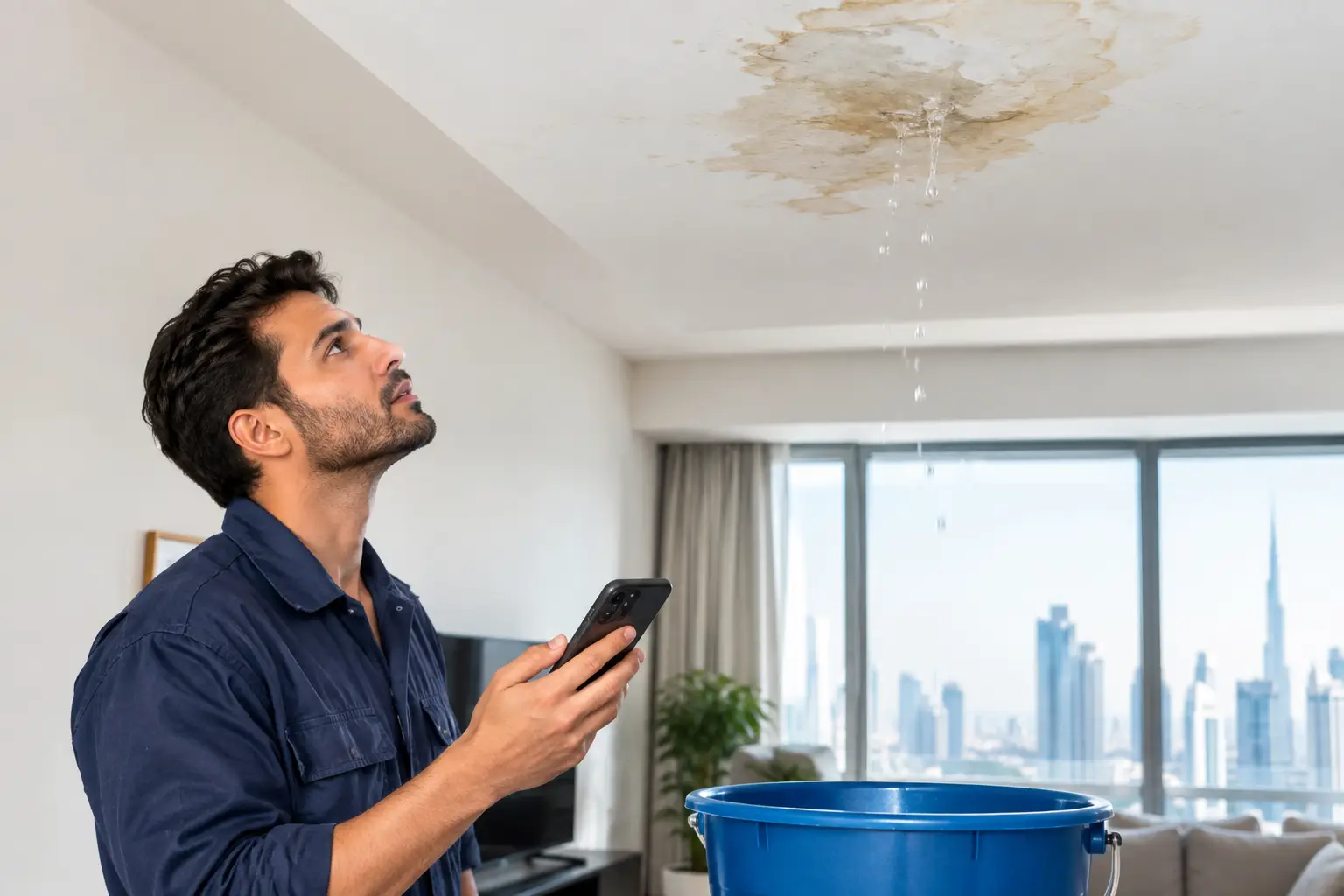
A brown ring spreading across a bedroom ceiling is rarely just a paint problem. Ceiling leak repair starts with stopping the water at its source, then checking how far moisture has traveled through the ceiling, insulation, fixtures, and walls. In a Dubai villa, acting early can prevent a small plumbing fault or AC drain issue from becoming damaged gypsum board, peeling paint, electrical risk, and an unnecessary disruption to family life.
Make the Area Safe Before You Investigate
If water is dripping near a light fitting, smoke detector, ceiling fan, or electrical outlet, switch off power to that area at the breaker if it is safe to do so. Do not touch a wet fitting or try to remove it while power is on. Move furniture, rugs, electronics, and valuables away from the affected area, then place a bucket under active drips.
A bulging or sagging ceiling needs extra care. Water can collect above gypsum board until the board weakens and gives way. Keep people out of the room, especially children, and avoid pressing or puncturing the ceiling yourself. It may seem like a quick way to release water, but the ceiling can collapse unpredictably and concealed wiring may be present.
Take clear photos of the stain, drip, or damaged area before wiping anything down. This helps a technician assess whether the leak is active and may also be useful when reporting an issue to a landlord, community management team, or insurer.
Find the Source of the Ceiling Leak
The visible stain is often some distance from the actual leak. Water follows pipes, beams, conduits, and low points before it reaches the ceiling surface. A proper diagnosis looks above, around, and sometimes beyond the mark on the ceiling.
Plumbing leaks from bathrooms and pipes
In multi-story villas, a ceiling leak below a bathroom may come from a shower drain, toilet connection, basin waste pipe, concealed water line, or failed waterproofing around the shower area. A leak that appears only after someone showers points toward the drain, shower tray, grout, sealant, or waterproofing. A stain that grows even when no one is using the bathroom may indicate a pressurized water pipe.
Do not assume that cracked grout is the only cause. Grout is not waterproof on its own, and replacing it without testing the drain, pipework, and waterproofing can leave the real issue unresolved.
AC drain and condensation problems
Dubai AC systems work hard for much of the year, producing significant condensation. A blocked condensate drain, damaged drain line, overflowing drain tray, or poorly insulated refrigerant pipe can cause water marks around a false ceiling or near an AC vent. These leaks may be more noticeable when the AC has been running for several hours.
An AC-related ceiling leak does not necessarily mean the cooling unit needs replacing. It may require drain cleaning, insulation repair, a drain line correction, or a check of the unit's level and tray condition. The right repair depends on the cause, not just the location of the water stain.
Roof, terrace, and exterior water entry
If the leak appears after rain, suspect roof waterproofing, terrace finishes, flashing, parapet walls, roof drains, or cracks around pipe penetrations. Dubai does not see frequent rainfall, but a short, heavy storm can expose weaknesses that went unnoticed in dry weather. Water can also enter through an exterior wall and show up as a ceiling stain indoors.
Roof leaks can be difficult to trace because the entry point may be several meters away from the visible damage. A technician may need to inspect the roof surface, drainage paths, joints, and nearby service penetrations before recommending a repair.
Water tanks, pumps, and hidden services
Villas with roof tanks or service areas should also be checked for overflow, failed float valves, leaking tank connections, and pipe faults. In some homes, a ceiling issue is caused by a leak in an adjacent utility space rather than directly overhead. This is why a quick visual patch is not a reliable ceiling leak repair method.
Why Drying Matters as Much as Stopping the Leak
Once the source has been repaired, the ceiling still needs to dry properly. Painting over a damp patch can trap moisture and lead to blistering, recurring stains, odor, or mold growth. In a humid room such as a bathroom, drying may take longer than expected.
A technician should check whether the gypsum board has softened, whether insulation is wet, and whether moisture has reached timber, metal framing, or electrical components. Minor staining on a dry, firm ceiling may only need stain blocking and repainting. A soft, swollen, cracked, or sagging section often needs to be removed and replaced after the area is dry.
This is the trade-off homeowners sometimes miss: repairing only the visible surface is cheaper at first, but it can mean paying for the same work twice if moisture remains behind it. On the other hand, replacing a large section of ceiling before confirming the leak source can also waste money. Diagnosis, leak repair, drying, and restoration should happen in that order.
What a Professional Ceiling Leak Repair Visit Should Include
A dependable repair should give you more than a fresh coat of paint. The technician should identify likely causes, inspect related plumbing or AC components, explain what needs immediate attention, and tell you what may need monitoring.
For an active plumbing leak, the work may include isolating the water supply, pressure testing where appropriate, repairing the faulty connection or pipe, and checking for further seepage. For a drain or waterproofing issue, testing may involve running water in a controlled way to confirm where it escapes. For AC leaks, the drainage route and indoor unit should be checked rather than simply cleaning the visible drip.
After the repair, ask whether the affected area needs drying time before ceiling work begins. You should also receive a clear explanation of what caused the problem and what signs would indicate that moisture is still present. That information is particularly helpful for landlords arranging repairs between tenants or families trying to avoid repeat disruption.
Homes Done Right can coordinate the relevant plumbing, AC, electrical, and general repair work so you are not left trying to diagnose the issue and arrange separate trades on your own.
When a Ceiling Stain Can Wait, and When It Cannot
A small, old stain that is completely dry, unchanged, and far from electrical fittings may be scheduled as a routine repair. It still deserves inspection before repainting, especially if its cause was never confirmed.
Treat the situation as urgent if water is actively dripping, the ceiling is bulging, a light fixture is wet, paint is suddenly bubbling, or the stain is growing quickly. A musty smell, repeated stains in the same place, and dark spotting can also indicate hidden moisture that needs attention.
If you live in a rented property, report active leaks promptly and keep your photos and messages. If the problem comes from common building systems or a neighboring unit, early reporting creates a clearer record and can speed up access for inspection. Even where responsibility sits elsewhere, protect your belongings and keep the affected room safe while the issue is being handled.
Preventing Another Leak
Many ceiling leaks can be reduced with regular checks rather than emergency call-outs. AC drain cleaning before heavy-use periods, bathroom sealant inspections, roof and terrace drainage checks, and early repairs to loose tiles or failing grout all help limit water entry. Homes with tanks should also have connections, overflow points, and float valves checked periodically.
An Annual Maintenance Contract can be useful for villa households that prefer planned AC, plumbing, and general maintenance visits instead of waiting for a fault to show itself through the ceiling. It will not prevent every leak, but it can catch common causes before they damage finishes inside the home.
A ceiling should feel like the most uneventful part of your home. When it starts showing signs of water, treat it as useful evidence, not a cosmetic inconvenience: protect the area, find the source, and allow the repair to be completed properly.