

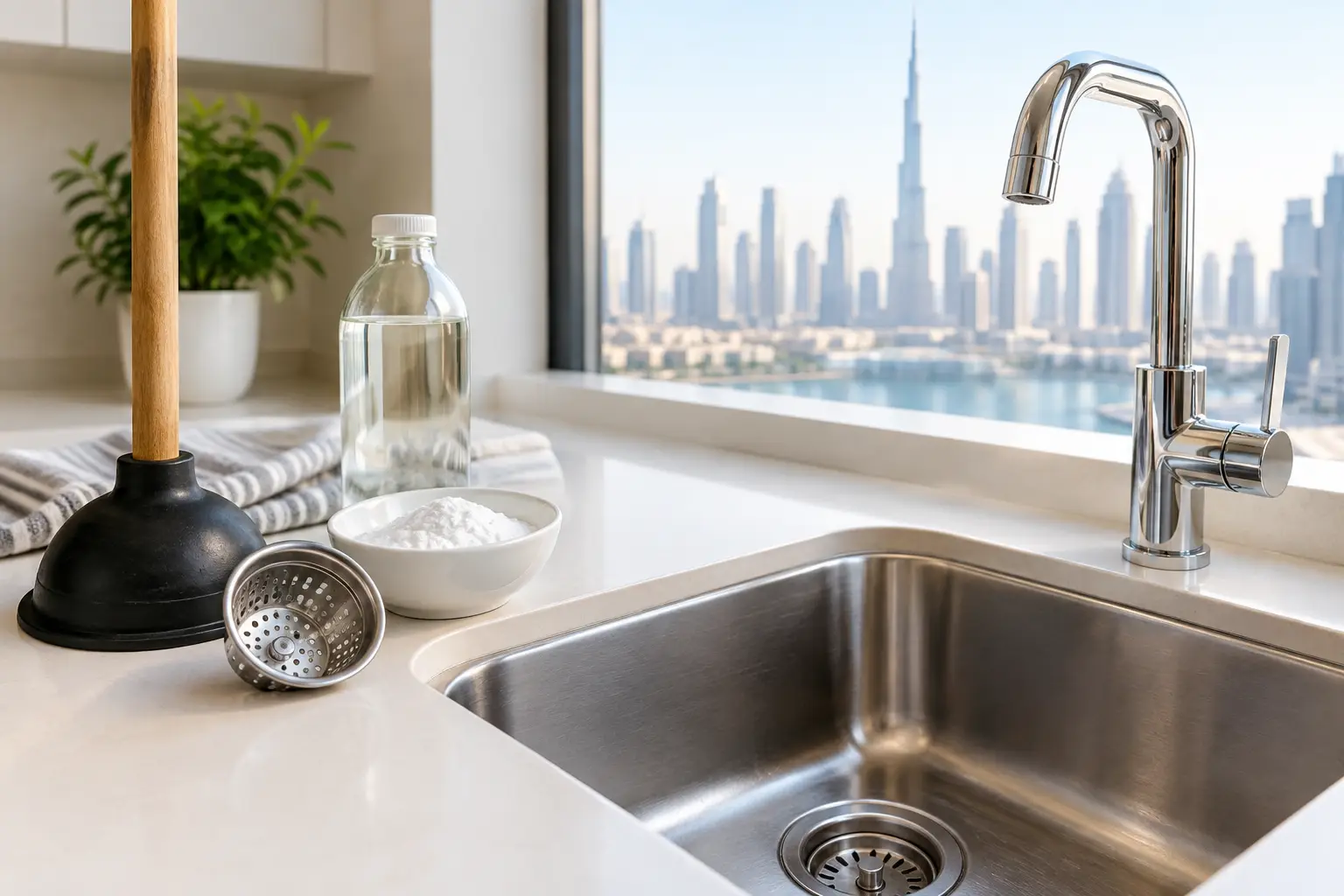
A drain rarely blocks without warning. Water starts taking longer to disappear after a shower, the kitchen sink gives off an unpleasant smell, or the bathroom basin makes a gurgling sound. The best drain clog prevention is not a harsh chemical poured down the pipe after trouble begins. It is a few consistent household habits, combined with early action when drainage changes.
For busy villa households in Dubai, prevention matters because a small blockage can quickly become a messy disruption. More people using bathrooms, larger kitchens, outdoor drains, and everyday cooking all put pressure on a home’s plumbing. The good news is that most common clogs are preventable.
Best Drain Clog Prevention Starts at the Drain Opening
What enters the drain is usually more important than what you pour into it afterward. Pipes are built to carry water and wastewater, not food scraps, cooking grease, hair, or cleaning wipes. These materials can collect inside bends and joints, gradually reducing the space available for water to flow.
In the kitchen, use a sink strainer to catch food particles before they enter the waste pipe. Empty it into the trash daily, especially after washing rice, vegetables, coffee grounds, or leftover food from plates. Even homes with a garbage disposal should avoid treating it as a replacement for a trash bin. Fibrous vegetables, eggshells, coffee grounds, and large quantities of food can still create problems further along the line.
Bathroom sink and shower drains need the same attention. A simple hair catcher is one of the most effective low-cost measures available. Remove collected hair after showers rather than allowing it to wash through. Hair combines easily with soap residue, skin oils, and product buildup, creating the dense clumps that cause slow shower drains.
Toilet drains deserve a clear household rule: flush only toilet paper and human waste. Products marked as flushable can still remain intact long enough to catch in pipework or contribute to a larger blockage. Facial tissues, wet wipes, cotton pads, dental floss, paper towels, and sanitary products belong in the trash.
Keep Grease Out of the Kitchen Sink
Cooking grease is one of the most common causes of kitchen drain blockages, particularly in homes where meals are prepared frequently. Hot oil may look harmless as it runs down the sink, but it cools inside the pipe. Once it solidifies, it becomes sticky and catches other debris.
Let oil, fat, and meat drippings cool in a heat-safe container, then dispose of them with household waste. Before washing pans and dishes, wipe off excess grease with a paper towel. This small step is more effective than relying on hot water, which may move grease a short distance but does not remove the underlying issue.
The same approach applies to heavy sauces, flour-based mixtures, and oily food residue. Plenty of water helps carry small traces through the system, but water cannot reliably dissolve accumulated fat. If your kitchen sink already drains slowly, avoid adding more grease while waiting for the issue to be assessed.
Use Cleaning Methods That Do Not Damage Pipes
A weekly flush with hot tap water can help rinse away light soap and food residue. For bathroom sinks and showers, remove the stopper or drain cover when possible and clear visible hair and buildup by hand. This is often more useful than repeatedly pouring products into the drain.
Baking soda and vinegar are commonly suggested as a home remedy. They may freshen a drain and help loosen very light residue, but they are not a reliable solution for a formed clog. They also should not be mixed with commercial drain cleaners. If chemicals have already been used, do not add another product until you know exactly what is in the pipe.
Strong chemical drain cleaners come with trade-offs. They can produce heat and fumes, may damage older pipework or seals when overused, and can be dangerous if they splash back from a blocked drain. They can also make a later plumbing visit less safe for the technician. For a recurring or complete blockage, professional drain clearing is usually the safer choice than escalating from one chemical product to another.
Prevention Habits for Showers, Basins, and Toilets
Bathrooms produce a different type of buildup than kitchens. Soap scum, hair, toothpaste, shaving residue, and mineral deposits can all reduce drainage over time. In Dubai, hard water can add to the issue by leaving mineral scale on fixtures and around drain openings.
A practical routine is to check shower and basin drains every one to two weeks. Lift out hair catchers, rinse them, and wipe the area around the drain opening. If the basin stopper collects toothpaste and hair underneath, clean it before the debris is pushed deeper into the pipe.
For family bathrooms, it helps to make prevention easy rather than expecting everyone to remember technical plumbing rules. Keep a small covered trash bin near the toilet, install hair catchers in shower drains, and explain that wipes and cotton products are not for flushing. These small systems are especially useful in homes with children, guests, or household staff.
Do Not Forget Outdoor and Floor Drains
Villa homes often have floor drains in utility rooms, balconies, bathrooms, garages, or outdoor areas. These drains can collect sand, leaves, soil, pet hair, and debris after cleaning or windy weather. If they are neglected, water may pool where it should drain away.
Check outdoor grates regularly and clear visible debris before it is washed inside. Avoid sweeping sand or garden waste into a floor drain, even if it seems like the quickest option. Where a drain is used infrequently, running water through it occasionally can help maintain the water seal and reduce odors coming back through the pipe.
If a balcony or outdoor drain overflows during cleaning or rain, do not assume it is a minor inconvenience. Standing water can affect surrounding finishes, create slip risks, and reveal a blockage that needs proper clearing.
When a Slow Drain Needs Professional Attention
A plunger can help with a simple, localized blockage, but repeated plunging is not a long-term maintenance plan. The same applies to repeatedly removing hair from a drain that keeps slowing down. Recurring symptoms often mean debris is farther inside the line or that there is a larger issue affecting the pipework.
Arrange a plumbing inspection if you notice several drains slowing at once, water backing up into another fixture, persistent bad odors, gurgling sounds, or a toilet that regularly needs plunging. These signs can point to a blockage beyond one sink or shower drain. In a larger property, diagnosing the right section of pipe early can prevent water damage and a more disruptive repair later.
It also makes sense to seek help if you have tried a basic mechanical cleanout and the problem returns quickly. A qualified technician can clear the drain safely, assess what caused the blockage, and explain whether the issue is household buildup, a damaged pipe, a drainage slope problem, or an external obstruction.
Make Drain Care Part of Regular Home Maintenance
Drain prevention works best when it is routine rather than reactive. A few minutes spent emptying strainers, clearing shower hair, and keeping grease out of the sink can prevent the inconvenience of an emergency blockage. For homeowners who prefer planned care, drain checks can also be included as part of broader preventative home maintenance alongside plumbing, AC, and general repairs.
Homes Done Right can help when a drain is slow, blocked, or repeatedly causing concern, but the best result is always a home where small warning signs are handled before they become a bigger problem. Treat your drains like any other working part of the property: use them carefully, check them regularly, and act while the water is still only slowing down.