

A damp patch on the ceiling below an upstairs bathroom is rarely just a paint problem. It can be the first visible sign that water has worked past tiles, grout, or fittings and into the structure beneath. Bathroom waterproofing repair addresses the source of that moisture before a small leak becomes damaged ceilings, loose tiles, mold growth, or a dispute with a tenant or neighbor.
In Dubai villas, bathrooms work hard. Daily showers, warm conditions, AC humidity, and normal movement in the building can expose weak points around showers, floor drains, bathtubs, and pipe penetrations. The right response is not always to retile the entire room. A proper inspection helps determine whether the issue is a plumbing leak, failed sealant, damaged grout, or a waterproofing membrane that has stopped doing its job.
Signs Your Bathroom May Have a Waterproofing Problem
Waterproofing sits behind or beneath the finished surfaces, so the earliest signs often appear outside the bathroom itself. A ceiling stain in the room below, peeling paint on an adjoining wall, or a musty smell around a shower can all point to trapped moisture.
Other warning signs are more obvious inside the room. Tiles may sound hollow when tapped, grout may repeatedly crack or darken, silicone around the shower tray may split, or water may remain in one area of the floor instead of flowing toward the drain. If the same problem returns after fresh grout or sealant has been applied, the surface repair may be hiding a deeper failure.
Water pressure can offer a useful clue. If a water meter continues moving when all fixtures are off, or pressure drops without a clear reason, a supply pipe leak may be involved. In that case, waterproofing alone will not solve the problem. The plumbing issue needs to be located and repaired first.
Waterproofing Failure or a Plumbing Leak?
These issues are easy to confuse because both can leave marks on ceilings and walls. The difference matters because the repair approach, cost, and amount of tile removal can be very different.
A plumbing leak can occur even when the bathroom is not being used. Pressurized pipes, concealed connections, toilet feed lines, and drainage pipes can all fail. The moisture may be continuous or appear after flushing, running a basin, or using a specific shower fixture.
A waterproofing failure is usually connected to bathroom use. For example, the ceiling below may remain dry until someone takes a shower, water may appear along the outside of a shower enclosure, or damage may worsen after the floor is washed. Water is entering through the finished surface and bypassing the protective layer beneath it.
A skilled technician should test rather than guess. This may involve checking exposed plumbing connections, inspecting silicone joints, assessing floor drainage, and carrying out controlled water tests in separate areas. For larger or unclear leaks, moisture detection equipment can help narrow down the source before opening walls or floors unnecessarily.
What Bathroom Waterproofing Repair Usually Involves
The scope depends on where the failure is and how far moisture has traveled. A small issue at a shower screen or bathtub edge may only need old silicone removed, surfaces cleaned and dried, and a properly applied sanitary sealant. This is a valid repair when the membrane behind the tiles is sound and the leak is clearly limited to that joint.
Cracked or missing grout can also allow water into tile joints, particularly in showers. Regrouting can improve the finish and help reduce surface water entry, but it should not be presented as a guaranteed cure for every leak. Grout is not the primary waterproof barrier. If water has already reached the screed or wall behind the tiles, replacing grout alone may provide only temporary relief.
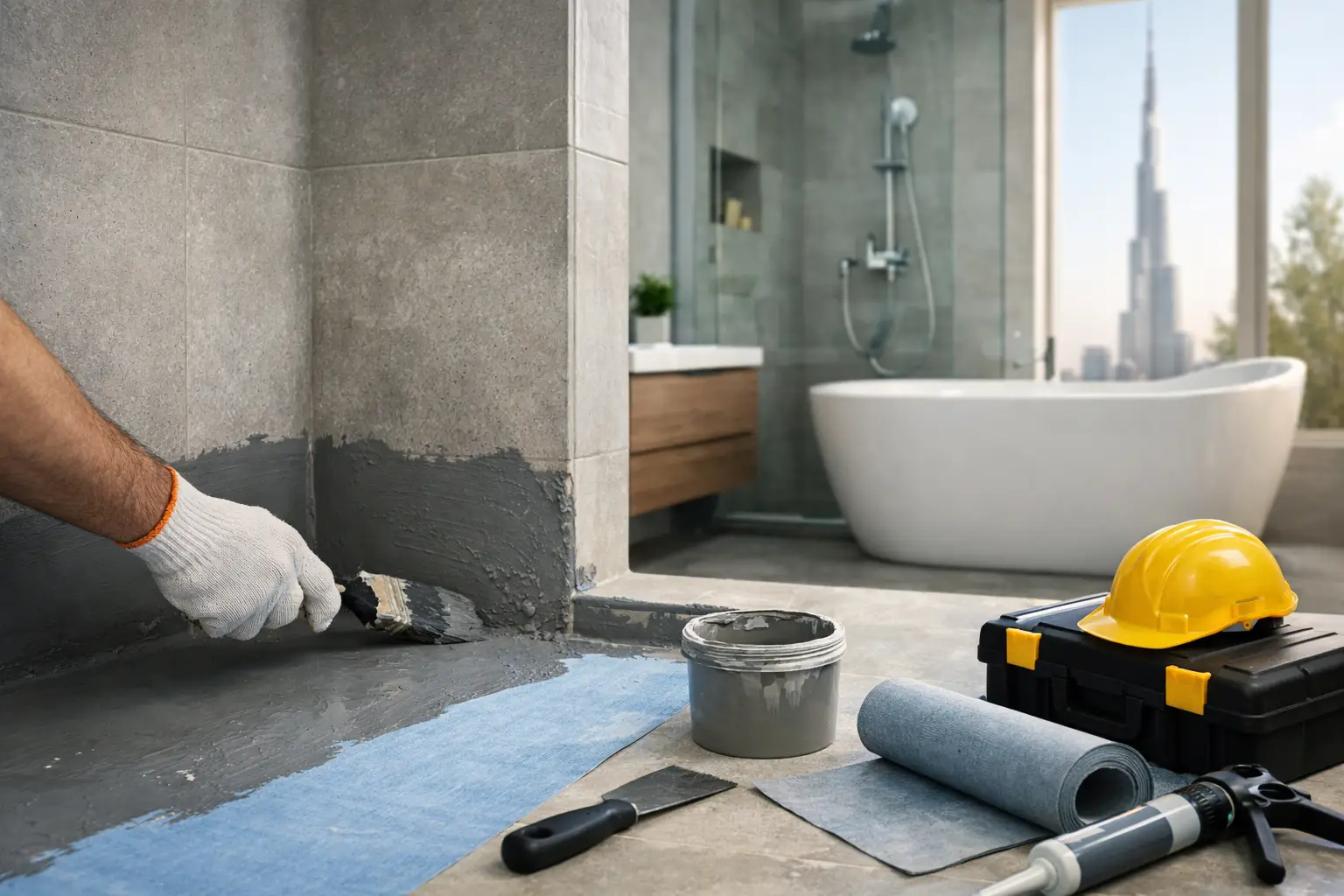
Where testing indicates membrane failure, the affected tile area generally needs to be removed. The substrate is then allowed to dry, prepared correctly, and repaired as needed. A waterproof membrane is applied across the floor or wall area, with particular care at corners, floor-to-wall junctions, drains, shower niches, and pipe penetrations. These details are where many failures begin.
After the membrane has cured, a flood test may be used to confirm that the area holds water as intended before tiles are replaced. New tiles, grout, and flexible sealant complete the work. In some cases, the damaged area is small enough for a localized repair. In others, especially where the shower floor or multiple walls are affected, removing and waterproofing the full wet area is the more responsible choice.
When a Local Repair Makes Sense
A targeted repair can save time, cost, and disruption when the source is clear. A leaking shower enclosure, failed silicone around a bathtub, a loose drain cover, or one damaged section of grout does not automatically mean the entire bathroom needs to be renovated.
However, local work has limits. If tiles are lifting, moisture is widespread, the ceiling below has repeatedly been repaired, or water escapes from more than one side of the shower, a patch may simply delay a larger job. It also depends on the age and condition of the bathroom. Older bathrooms may have no effective membrane behind the tiles, or the existing layer may have deteriorated across a wider area.
The sensible question is not, “What is the cheapest repair today?” It is, “What repair will stop this problem from returning?” A clear assessment should explain the likely cause, the recommended scope, what can be preserved, and where there is uncertainty until finishes are opened.
Common Areas That Need Extra Care
Some parts of a bathroom are more vulnerable than others. The shower floor is a high-risk area because it receives direct water every day. Water should slope consistently toward the drain, without pooling near corners or along the shower screen.
Floor drains need careful sealing where the waterproofing layer meets the drain body. If this junction fails, water can pass below the floor tiles even when the surface drain appears to work normally. A blocked drain can make the situation worse by allowing water to sit longer on the floor.
Wall corners, shower niches, plumbing outlets, and the base of a bathtub also need flexible, well-finished joints. Rigid grout in areas that move slightly can crack over time. Proper sealant allows for small movement while maintaining a water-resistant barrier.
In villa bathrooms, check adjacent spaces as well. A laundry room, dressing area, bedroom wall, or ceiling below the bathroom may reveal the real extent of the issue. Repairing only the most visible stain without tracing the water path can lead to repeat damage.
How to Protect Your Home During the Repair
If you suspect an active leak, reduce bathroom use until it has been assessed. Avoid repeatedly showering in the affected area to “see if it gets worse.” Each use can send more moisture into concealed spaces and increase drying time later.
Take clear photos of ceiling marks, wall damage, and any pooling water before repainting or cleaning it away. Note when the leak appears, such as after showering, flushing, or running the basin. This information helps a technician isolate the cause faster.
If water is close to light fittings, electrical switches, or ceiling fixtures, treat it as urgent. Turn off the relevant circuit only if it is safe to do so, keep people away from the affected area, and arrange qualified help. Water damage and electrical systems should never be handled as a DIY experiment.
Once the repair is complete, allow all waterproofing materials, tile adhesive, grout, and sealants to cure for the recommended time before using the shower. Rushing this stage can compromise an otherwise good repair.
Preventing Repeat Bathroom Water Damage
Regular checks are simple and worthwhile. Look at silicone joints every few months, especially around shower screens and tubs. Keep floor drains clear of hair and soap residue, and deal with cracked grout before it becomes a route for persistent moisture.
Good ventilation matters too. Run the exhaust fan during and after showers, or open a window where practical. Ventilation will not repair failed waterproofing, but it helps limit condensation and reduces the chance of mold forming on damp surfaces.
For busy households, preventative maintenance is often easier than waiting for a ceiling stain. Homes Done Right can help assess bathroom leaks, coordinate the necessary plumbing and tile work, and explain whether a focused repair or wider waterproofing work is the better option. A bathroom should be a contained wet area, not a hidden source of damage elsewhere in the home.