

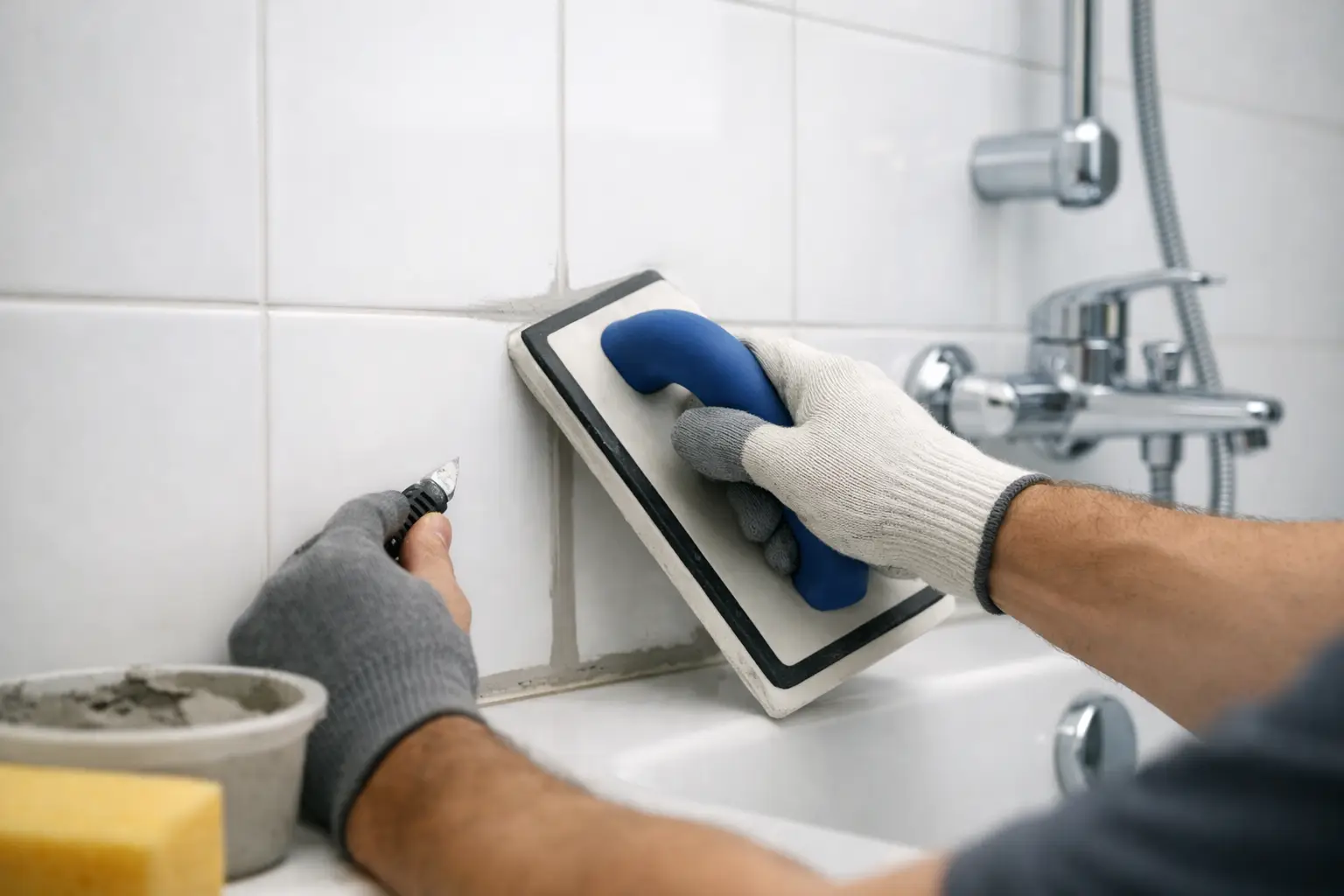
Bathroom tile regrouting cost is usually a much smaller expense than replacing a bathroom floor or shower wall. But a low quote is only useful if the old, failing grout is properly removed, the joints are cleaned, and the new grout is applied evenly. For Dubai villa households, where bathrooms often see heavy family use, moisture, and regular cleaning, the condition behind the grout lines matters as much as the visible finish.
Regrouting can make tiled surfaces look clean and cared for again. It can also close small gaps that let water sit behind tiles. However, it will not solve every bathroom problem. If tiles are loose, the wall feels soft, or water is already leaking into the room below, the repair may need more than fresh grout.
What does bathroom tile regrouting cost in Dubai?
For a small, localized repair, homeowners may spend around AED 250 to AED 500. A standard bathroom floor or shower-area regrouting job commonly falls around AED 500 to AED 1,200, depending on the surface area and condition of the joints. More extensive work, including deep grout removal, mold treatment, silicone replacement, or difficult shower-wall access, may cost AED 1,000 to AED 2,500 or more.
These are practical guide ranges, not fixed prices. A technician should assess the bathroom before confirming the scope. Two bathrooms of the same size can need very different levels of work. One may only have stained grout near the shower entrance, while another may have cracked joints throughout, missing silicone around fixtures, and moisture damage that needs investigation first.
The lowest price may cover a quick surface touch-up rather than proper regrouting. That can improve the appearance temporarily, but loose or contaminated grout may fail again soon after. A clear quote should explain whether the job includes removal of old grout, cleaning, new grout application, sealing where appropriate, and replacement of silicone joints.
What affects the cost of regrouting bathroom tiles?
The biggest factor is the area being repaired. Regrouting a few damaged lines around a bathtub is quicker than working across a full bathroom floor and shower enclosure. Wall tiles can also take longer than floor tiles because of access, corners, niches, soap holders, and fittings that need careful detailing.
The depth and condition of the old grout also matter. Proper regrouting usually means removing deteriorated material from the joints before adding new grout. If the old grout is merely painted over or a thin layer is pressed on top, the finish may not bond well. Heavily stained grout, hard mineral buildup, or visible mold can add preparation time.
Tile type and joint width influence labor as well. Small mosaic tiles have far more grout lines per square foot than large-format tiles. Natural stone may require a different approach and suitable products to avoid staining or damage. Decorative tile borders, shower niches, and tight spaces behind toilets make the work slower, even in a relatively small bathroom.
Access is another practical issue in larger homes. A ground-floor guest bathroom with clear working space is straightforward. A busy family bathroom may need work scheduled around school and work routines, with time allowed for the grout to cure before the shower can be used. If the room has poor ventilation or needs drying first, that can affect the timeline.
Finally, the condition of the silicone sealant should be considered separately. Silicone is typically used at corners and where tiles meet a shower tray, bathtub, vanity, or fixture. Grout in those movement areas can crack. Replacing discolored, split, or loose silicone during the same visit often makes sense, but it should be shown clearly as part of the scope rather than assumed.
Regrouting versus replacing tiles
Regrouting is the right choice when tiles are secure, the tile backing is sound, and the problem is mainly worn, cracked, stained, or missing grout. It is a targeted maintenance repair that can refresh a bathroom without the disruption and cost of removing tiles.
Tile replacement may be necessary when several tiles have lifted, move when pressed, or sound hollow over a wide area. Those signs can point to failed adhesive, moisture behind the tiles, or movement in the underlying surface. Regrouting over those symptoms may hide the issue for a short time without stopping water from getting where it should not.
A few damaged tiles can sometimes be replaced individually before regrouting the affected section. This depends on whether matching tiles are available and whether removing them would disturb surrounding tiles. In older Dubai properties, exact replacement tiles are not always easy to source, so it is worth discussing the options before work begins.
Signs you should not delay the repair
Grout does not need to look perfect to be functional. Minor discoloration from normal use is often cosmetic and can be improved with a deep clean. The concern is when the grout is breaking down or allowing water to reach areas behind the tile surface.
Book an assessment if you notice grout falling out, cracks that keep returning, dark staining that does not clean away, or a persistent musty smell near the shower. Pay close attention to leaking shower screens, gaps around the tub, and water marks on an adjacent wall or ceiling. These may indicate a sealing or waterproofing issue, not just an appearance problem.
In a villa, a small upstairs bathroom leak can affect ceilings, paintwork, wardrobes, and electrical fittings below. Addressing failing grout and silicone early is generally simpler than waiting for visible water damage elsewhere in the home.
What a proper regrouting visit should include
A good repair starts with identifying the cause of the damaged grout. If movement, a plumbing leak, or a failed shower seal is present, that should be explained before new grout is applied. Otherwise, the same cracks or staining may return.
The work should then involve removing loose or failed grout to an appropriate depth, clearing dust and debris from the joints, and allowing the area to dry if needed. New grout is applied evenly, cleaned off the tile faces, and finished carefully at edges. Any required silicone replacement should be completed with a suitable bathroom-grade sealant.
Before approving a quote, ask whether it covers these four details:
- Removal and disposal of failing grout rather than a surface coating
- Cleaning or treatment of mold, staining, and mineral deposits where needed
- Replacement of silicone in corners and around shower or tub edges
- The expected drying and curing period before the bathroom can be used normally
This avoids confusion about what the price covers and helps you plan around the bathroom being out of use for a period of time.
Can you regrout a bathroom yourself?
Small, dry-area touch-ups can be manageable for a confident homeowner with the right tools and patience. The challenge is not applying grout. It is removing the failed material without chipping tile edges, preparing clean joints, choosing the correct grout, and finishing corners with silicone rather than grout.
DIY work becomes riskier in a shower enclosure, around a bathtub, or anywhere there are signs of moisture behind the tiles. Using the wrong product or sealing over damp joints can trap an existing problem. If you are unsure whether the issue is cosmetic or water-related, having it assessed first can prevent a larger repair later.
For households that prefer a clear scope and scheduled work, Homes Done Right can assess bathroom grout, silicone joints, loose tiles, and related plumbing concerns in one visit. That is useful when the visible damage may involve more than one trade.
How to keep new grout in better condition
After regrouting, follow the technician’s curing guidance before getting the surface wet. Once the bathroom is back in use, reduce standing water by using an extractor fan where available, opening ventilation after showers, and wiping excess water from shower walls and screens. Regular cleaning with a suitable non-abrasive product helps prevent buildup without wearing away the finish.
Avoid harsh acidic cleaners unless they are suitable for your tile and grout type. They can damage some natural stone surfaces and gradually weaken cement-based grout. Check silicone joints every few months, especially around shower trays and bathtubs, because they often show early signs of separation before a leak becomes obvious.
Fresh grout should give a bathroom a clean finish and a better line of defense against everyday moisture. If the joints are failing, deal with them while the repair is still focused, straightforward, and easy to schedule.