

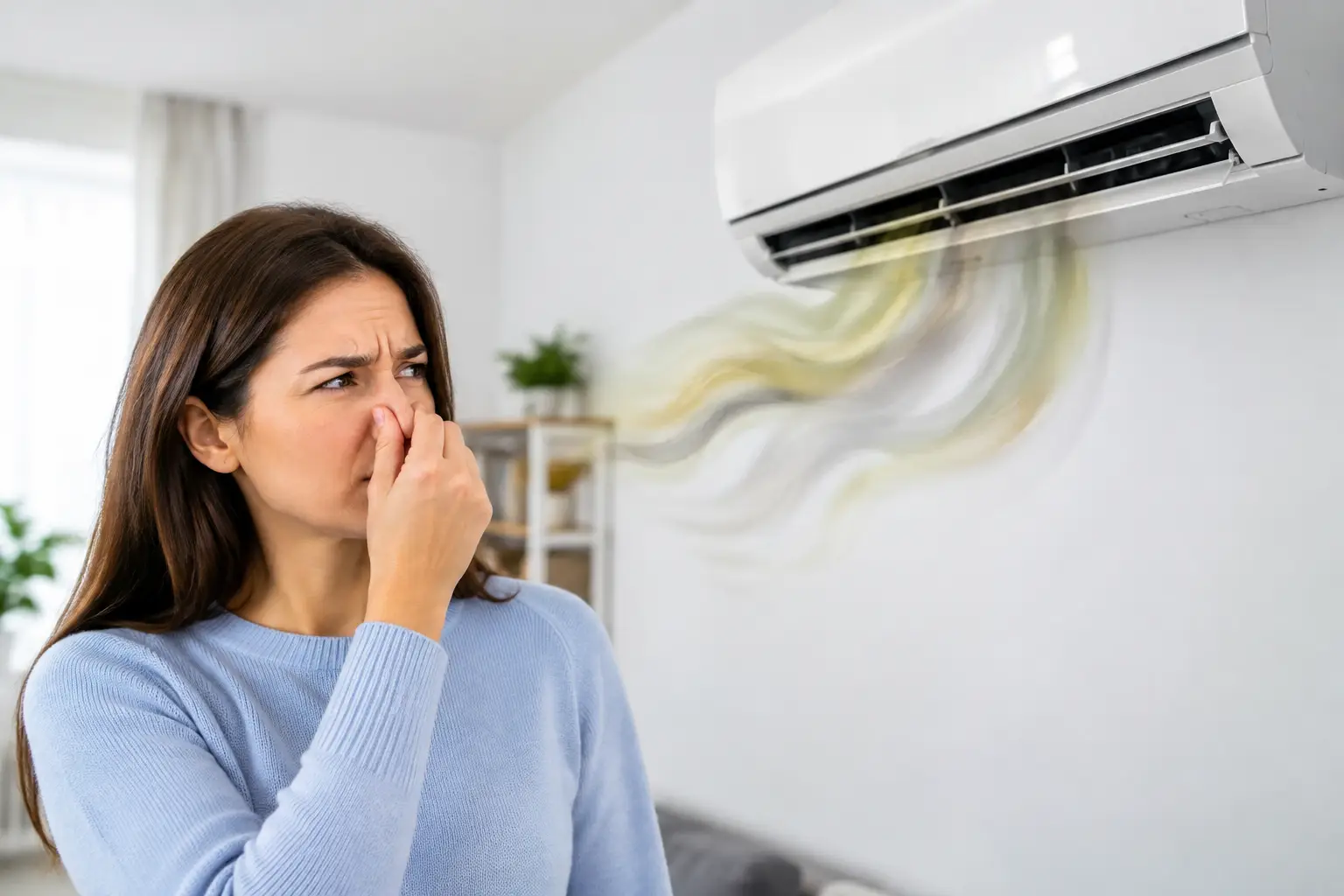
A bad smell from the AC can make a villa feel uncomfortable long before the temperature changes. AC odor causes are often linked to moisture, dust, drainage, or an electrical component inside the system. Some are straightforward maintenance issues, while others need prompt attention to protect your equipment and household safety.
The useful clue is not simply that the AC smells bad, but what it smells like and when the odor appears. A musty smell when cooling starts points to a different issue than a burning smell after the unit has been running for an hour. Knowing the difference helps you decide whether to clean, monitor, or switch the system off and arrange a technician visit.
Common AC Odor Causes in Dubai Homes
Dubai AC systems work hard for much of the year. That means filters collect dust quickly, drain lines carry constant condensation, and concealed components can develop problems without obvious warning. In larger homes, where several indoor units and duct runs may operate at once, an odor can also be difficult to trace to one room.
Musty or damp smells
A musty, damp, or “old towel” smell is one of the most common complaints. It usually means moisture has remained somewhere it should not, allowing mold or mildew to grow. The most likely places are the indoor unit’s evaporator coil, air filter, drain pan, or condensate drain line.
A dirty filter restricts airflow and holds dust that can become damp. If the coil is dirty, condensation can mix with that buildup and create a persistent odor each time the AC starts. A partially blocked drain line can produce the same result because water sits in the tray rather than draining away properly.
You can check whether the filter looks gray, clogged, or damp and replace or clean it if it is designed to be washable. However, cleaning the filter alone will not solve a smell caused by buildup on the coil or a drainage blockage. If the odor returns quickly, a proper AC service should include checking the drain, tray, coil, and airflow rather than only spraying fragrance into the unit.
Sour, stale, or dirty-sock smells
A sour odor can be another form of bacterial or fungal growth on the evaporator coil. This is sometimes called dirty-sock syndrome because the smell is strongest when the unit first starts blowing cool air. It can occur even in a home that is kept clean, because the source is inside the AC where condensation regularly forms.
The solution depends on how much buildup is present. Light surface contamination may be addressed during a thorough cleaning, while heavier buildup may require more detailed coil treatment and drain work. Repeatedly masking the smell with air freshener does not remove the source and may make it harder to notice when the issue worsens.
A sewage or rotten-egg smell
A sewage-like smell may not always come directly from the AC. In some homes, negative air pressure or an unused floor drain can allow drain odors to enter a room when the AC is operating. Dry plumbing traps, blocked drains, or a problem near a bathroom, utility room, or kitchen can be mistaken for an air-conditioning fault.
If the smell is limited to one area, pay attention to whether it appears near a bathroom, laundry room, or floor drain. Running water briefly into an infrequently used drain can restore the trap seal in some cases. If the odor persists, it is worth assessing both the AC drainage and nearby plumbing rather than assuming one trade is responsible.
A true rotten-egg smell can also be associated with a gas issue. Although natural gas is not typical inside most Dubai residences, any strong sulfur-like odor should be treated cautiously. Turn the AC off, avoid switches or flames near the area, ventilate if safe to do so, and seek appropriate urgent assistance.
Burning, smoky, or hot-plastic smells
A burning smell is different from a musty odor and should never be ignored. It can happen when dust burns off heating components in climates where heating has not been used for a long time, but that explanation rarely applies to cooling operation in Dubai. During normal AC cooling, a burning, smoky, or hot-plastic smell may indicate an electrical fault, overheating motor, damaged wiring, failing capacitor, or debris affecting a component.
Switch the system off at the thermostat and, if the smell is strong or continues, isolate the relevant circuit only if you can do so safely. Do not restart the unit to see whether the odor disappears. Electrical faults can worsen under load, particularly during high-demand periods when an AC runs for long hours.
Chemical, sweet, or solvent-like smells
A sharp chemical smell may come from cleaning products used nearby, but if it appears only when the AC runs, it needs investigation. Refrigerant leaks are sometimes described as sweet or chemical-smelling, although smell alone is not a reliable way to diagnose one. Refrigerant should not be handled or topped up without finding and repairing the source of a leak.
You may also notice weak cooling, ice on refrigerant lines, hissing sounds, or a system that runs much longer than usual. These symptoms do not prove a leak, but they are useful information to share when booking service. A technician can test the system safely and explain whether the problem is refrigerant-related or caused by airflow, controls, or another component.
Dead-animal or pest odors
Occasionally, a strong decaying smell comes from a small animal, insect buildup, or pest activity near ductwork, a false ceiling, or an outdoor unit. This is more likely when one room smells worse than the rest or when the odor remains even after the AC is switched off.
Do not attempt to access concealed ducts or electrical areas yourself. The right approach may involve inspecting the AC route, ceiling void, and surrounding areas to identify the source before cleaning or sealing the affected section. Simply cleaning the indoor unit will not solve an odor coming from elsewhere in the system.
What to Do Before Booking an AC Visit
Start with the simple observations that help narrow down the problem. Note which room smells, whether it happens on startup or continuously, and whether cooling performance has changed. Check accessible filters for visible dust or moisture, but avoid opening electrical panels, dismantling the indoor unit, or pouring harsh chemicals into drain lines.
If the smell is mild and musty, switching the AC off for a short period and allowing the area to dry may reduce it temporarily. This is not a lasting repair if trapped water, a dirty coil, or a blocked drain is involved. Running the fan mode after cooling can help dry the coil in some systems, but it cannot remove existing microbial buildup.
For burning, smoke, electrical, or strong chemical odors, turn the unit off and arrange an inspection rather than waiting for the next routine service. If there is visible smoke, sparking, or a tripped breaker that will not stay on, treat the situation as urgent.
When an AC Smell Needs Professional Attention
An occasional dusty smell after a long period without use may clear quickly. Most recurring odors, however, are a sign that cleaning, drainage, airflow, or component checks are overdue. In Dubai villas, the issue may affect only one split unit, or it may be part of a wider ducted AC maintenance need.
A professional assessment should focus on the cause, not just odor removal. That means checking filters, coils, drain trays, drain lines, insulation, electrical connections, and the condition of the indoor and outdoor equipment where relevant. The right scope depends on the smell and the system type, so a clear description before the visit helps send the right technician prepared for the job.
Homes Done Right can help Dubai households investigate persistent AC odors, explain what is causing them, and carry out practical repairs or cleaning where needed. For homeowners who want fewer unpleasant surprises during peak cooling months, planned AC maintenance through an AMC can also catch drainage and cleanliness issues before they become noticeable.
A clean-smelling AC is not only about comfort. It is often a sign that moisture is draining properly, air is moving freely, and the system is receiving the routine attention it needs.