

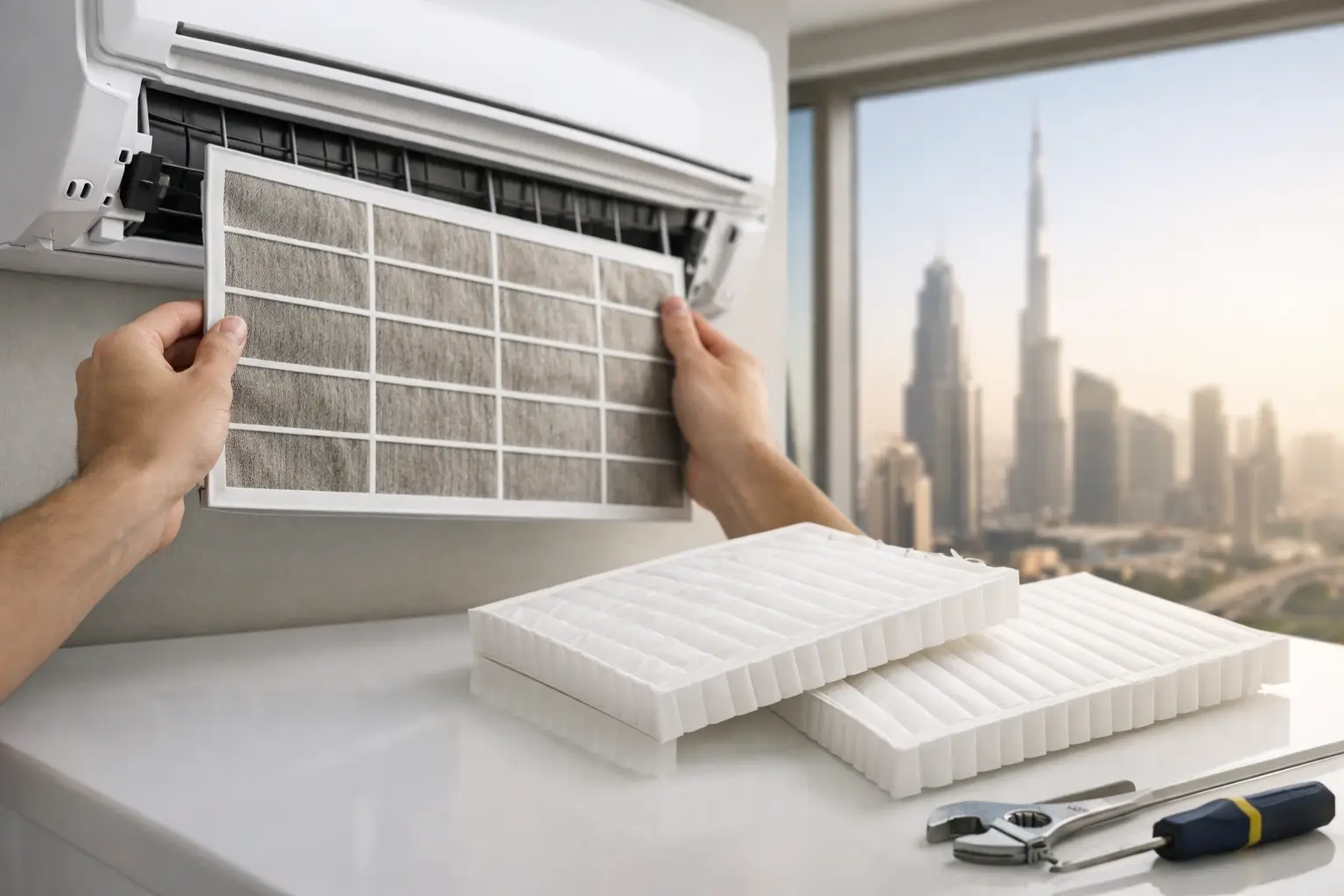
A dusty AC filter can turn a perfectly good Dubai cooling system into an expensive source of frustration. This AC filter replacement guide explains what to check, how often to replace or clean a filter, and when a simple filter issue may point to a larger AC problem.
For villa households, filter care is one of the few AC tasks that can prevent problems before they interrupt a busy week. It takes little time, but the right approach depends on the filter type, the condition of your home, and whether your system uses washable or disposable filters.
Why AC filters matter in Dubai
Your AC filter catches airborne dust, sand, lint, hair, and other particles before they move through the indoor unit. In Dubai, fine dust builds up quickly, particularly after windy conditions, construction activity nearby, or frequent opening of doors to gardens, terraces, and parking areas.
When the filter is blocked, the AC has to work harder to pull air through it. You may notice weaker airflow at vents, rooms that take longer to cool, more dust indoors, or an AC that seems to run continuously. A dirty filter does not cause every cooling fault, but it can contribute to higher energy use and unnecessary strain on the system.
For families, clean filters can also make a noticeable difference to day-to-day comfort. They help reduce the amount of dust recirculating through bedrooms and living areas. They are not a replacement for proper duct cleaning or treatment of mold, drainage, or coil issues, but they are a sensible first line of maintenance.
How often should you replace an AC filter?
There is no single schedule that suits every home. In a typical Dubai villa, checking filters every month is a practical habit, especially during the long cooling season. Many washable mesh filters need cleaning every four to eight weeks. Disposable filters often need replacing every one to three months, depending on their type and how quickly they collect dust.
Check more frequently if you have pets, young children, allergies, smokers in the household, ongoing nearby construction, or doors that are regularly open. A vacant property or lightly used guest room may need less frequent attention, although filters should still be inspected before heavy seasonal use.
Do not rely only on the calendar. Remove the filter and hold it up to a light. If light barely passes through, or the surface is visibly gray and dusty, it is time to clean or replace it. If the filter is torn, bent out of shape, or no longer sits securely in its frame, replacement is the better option.
AC filter replacement guide: find the right filter first
Before buying anything, identify the type of filter your system uses. Many residential split and fan coil units in Dubai have washable, reusable mesh filters behind the front panel. Others use disposable panel filters in a return-air grille, ceiling access panel, or air-handling unit.
A washable filter should generally be cleaned, dried completely, and put back in place. It should not be replaced with a random thick disposable filter unless the unit is designed to use one. Restrictive filters can reduce airflow if the system was not built for them.
For a disposable filter, use the size printed on the existing frame or measure the length, width, and depth carefully. The actual size can be slightly smaller than the nominal size printed on the label, so matching what is already installed is usually safest. Check the airflow arrow too. It should point toward the air handler or in the direction air travels into the system.
Higher-rated filters can capture smaller particles, but higher is not always better. A very dense filter may be helpful for certain allergy concerns, yet it can restrict airflow in a system not designed for it. If you are unsure, use the manufacturer-recommended specification or ask an AC technician to confirm the correct filter type during a service visit.
How to clean or replace your AC filter safely
Start by turning the AC off at the thermostat or wall control. If you are accessing a ceiling return grille or an indoor unit in an awkward location, use a stable step stool and do not force panels or clips. If the cover feels stuck, stop rather than risking damage to the unit.
For a wall-mounted split AC, carefully lift the front cover and slide out the filters. Hold them level where possible so loose dust does not fall into the room. For return grilles, open the latch gently and support the grille while removing the filter.
Washable mesh filters can usually be rinsed with lukewarm water. Use a soft brush only if dust is stuck to the mesh, and avoid harsh chemicals, high-pressure water, or bending the frame. Shake off excess water and allow the filter to air-dry fully before reinstalling it. A damp filter can encourage odors and may allow dust to stick more quickly.
Disposable filters should be placed directly into a sealed bag and discarded. Install the new filter so it sits flat without gaps around the edges. Then close the panel securely, restore power, and run the system for a few minutes. Listen for unusual noise and confirm that airflow feels normal.
Never run the AC for an extended period without a filter. Dust can quickly collect on the indoor coil and blower components, where it is harder and more costly to remove.
Signs the filter is not the only problem
Replacing a filter is a good first check when airflow is weak, but it is not a cure for every AC fault. If the filter is clean and the room is still warm, the problem may involve the thermostat, thermostat settings, indoor coil, blower motor, capacitor, refrigerant level, outdoor unit, or drainage system.
Arrange a professional assessment if you notice water leaking from the indoor unit, ice forming on pipes or coils, a burning smell, repeated tripping of an electrical breaker, loud rattling, or an AC that stops and starts without cooling. These are not issues to solve by repeatedly changing filters.
Persistent dust or musty odors also deserve a closer look. The source could be a dirty coil, blocked drain line, duct issue, moisture problem, or poor sealing around a return-air opening. A technician should explain what they find before recommending cleaning, repair, or replacement work.
Avoid the common filter mistakes
The most common mistake is waiting until cooling becomes noticeably poor. By then, the filter may have been restricting airflow for weeks. A monthly visual check is easier than trying to diagnose a comfort problem during a hot afternoon.
Another mistake is reinstalling a washable filter while it is still wet. The final mistake is using the wrong filter size or placing it in the wrong direction. A filter that fits loosely can allow unfiltered air around the edges, while one installed backward may not perform as intended.
Keep a simple reminder on your phone after each cleaning or replacement. In larger homes with several fan coil units, write the date on a small label inside each access panel. This prevents one rarely used room from being overlooked until it develops an airflow or odor issue.
Make filter care part of planned AC maintenance
Filters are only one part of a reliable cooling system. Regular AC maintenance should also include checking drainage, cleaning accessible components where appropriate, inspecting electrical connections, assessing cooling performance, and identifying wear before it becomes an urgent repair.
For homeowners managing multiple units, planned visits are often more practical than waiting for a breakdown. Homes Done Right can assess filter condition alongside the wider AC system and provide clear advice on what needs attention now and what can be monitored over time.
A clean, correctly fitted filter is a small task with a useful payoff: steadier airflow, less dust buildup, and a better chance that your AC is ready when every room in the house needs cooling.